 844 408 3056

 Hot Deal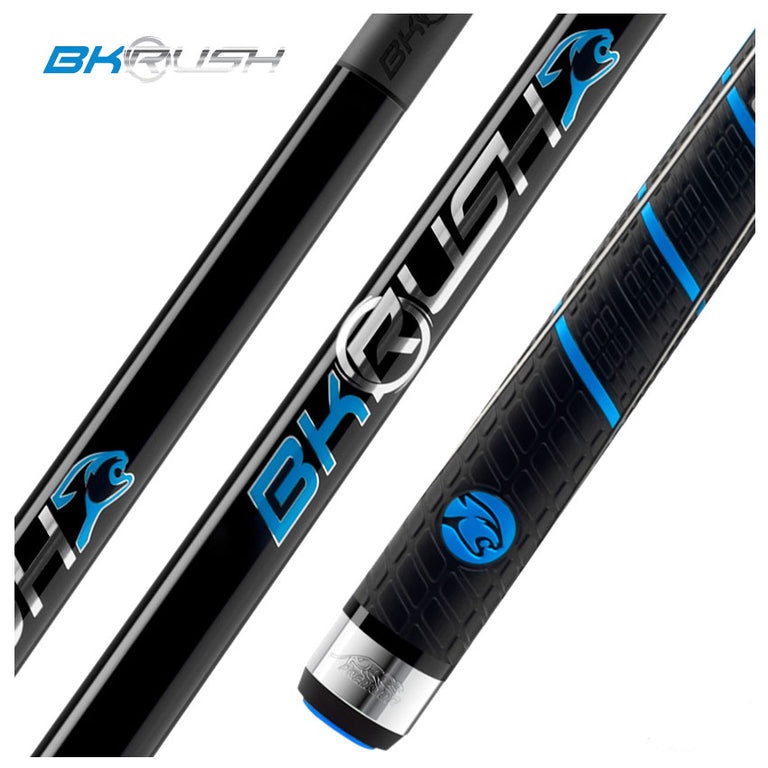
Justin Bergman is a national champion again. At the 2026 USA National Pool Championships in Dubuque, Iowa, Bergman worked through one of the strongest American fields assembled this year and claimed the USA National 10-Ball Championship, adding another major title to a career that has quietly become one of the most consistent in American pool. Hayden Ernst took silver, while Manny Ramirez and Brandon Shuff shared the bronze medal positions. For anyone who follows the domestic game, the podium tells its own story: a veteran shotmaker held off one of the fastest-rising young players in the country, with two established pros right behind them.
The win matters beyond the trophy. The USA National Pool Championships carried more than $45,000 in added prize money this year, more than double last year’s purse, and the event has grown into the clearest pathway for American players who want to represent Team USA internationally. BCA Chief Executive Officer Shane Tyree congratulated Bergman on what he called a well-earned national championship, and USA Cue Sports President Ed Liddawi praised the run as a display of skill, composure, and competitive excellence. Those are press-release words, but they point at something real. 10-Ball punishes everything loose in your game, and winning a national title in this discipline requires a level of discipline that every league player can learn from.
Why 10-Ball Is the Truest Test in Rotation Pool
If you have only ever played 9-ball, the differences look small on paper. One extra ball, call your shots, and the money ball counts only when called. In practice, those changes transform the game. The extra ball crowds the table and forces longer, more deliberate patterns. Call-shot rules eliminate the lucky roll-out that saves so many 9-ball racks. And because slop counts for nothing, every single shot has to be a decision rather than a hope.
Bergman thrives in this format because his game is built on precision rather than fireworks. Watch his title run and you see the same qualities over and over: center-ball cueing whenever possible, position routes that cross the shortest distance, and a refusal to attempt low-percentage outs when a safety wins the rack more often. That style does not always produce highlight reels. It produces championships.
The Break Is a Controlled Event, Not an Explosion
At the national level, the 10-ball break is about spread and control, not raw speed. The rack is tighter than a 9-ball diamond, the one ball sits at the head, and a wild break that sends the cue ball flying costs you the table. The pros hit a firm, repeatable break that parks the cue ball near center table and pushes the one toward a pocketable zone. If your break sends the cue ball three rails around the table, you are donating racks in a call-shot game.
Call-Shot Discipline Changes Your Decision Tree
In 9-ball, a tough cut with the two ball rolling toward a cluster is sometimes worth firing at because chaos can bail you out. In 10-ball, chaos is your enemy. The strong play is often a deliberate safety that leaves your opponent long and frozen. The medal matches in Dubuque featured exactly these exchanges, with players trading two and three safeties in a row before someone earned a true offensive chance. Patience won those racks. It will win yours too.
Pattern Play Under Pressure
Ten balls on the table means your first mistake compounds. The champions map three balls ahead at minimum, and they choose position zones rather than exact spots, giving themselves a margin for error on speed. When you watch a player like Bergman run out, notice how rarely the cue ball touches a rail more than once between shots. Short, simple routes survive pressure. Heroic routes collapse under it.
Three Habits From Dubuque You Can Steal This Week
You do not need a professional stroke to benefit from professional habits. These three translate directly to league night.
Play the Ghost in 10-Ball, Not 9-Ball
Rack ten balls, break, take ball in hand, and try to run out, calling every shot to yourself. Score it honestly. The extra ball and the call-shot constraint will expose pattern weaknesses that 9-ball ghost drills let you hide. Most B players who try this discover their real weakness is not shotmaking, it is choosing the wrong ball to be on.
Declare Your Safeties Out Loud
During practice sets, commit to a called safety the same way you commit to a called shot. Saying it forces you to define what the safety should accomplish: distance, a blocking ball, a frozen cue ball. Vague defense is barely defense at all. Keep a simple tally of how many of your called safeties actually produced a foul or a weak return from your opponent. Most players discover their safety success rate is far lower than they assumed, and the act of measuring it is what finally makes the defensive side of their game deliberate instead of decorative.
Practice One Break Speed Until It Repeats
Set up ten racks and break them all at eighty percent power, tracking where the cue ball finishes. When eight out of ten breaks leave the cue ball in the middle third of the table, you have a tournament break. Only then experiment with adding pace.
The Equipment Story Behind the Event
The Predator Group stood alongside Aramith, Diamond Billiard Products, Iwan Simonis, and Masters Chalk as sponsors and partners of the championships, and that is no accident. Predator equipment has become the default choice for a huge share of serious American rotation players, because the brand built its reputation on exactly the qualities 10-Ball rewards: low cue-ball deflection, predictable spin response, and break cues engineered for control as much as power.
A cue like the Predator Black BK Rush Break Cue with Sport Grip is the modern answer to the controlled 10-ball break, pairing a stiff carbon composite shaft with a hard tip so energy goes into the rack instead of into cue ball flight. For the playing cue, the Predator P3 Black No Wrap gives you the REVO-style low-deflection performance that lets you cue confidently off-center when a pattern demands spin, and the Predator Throne3 5 shows how far the brand pushes design on its flagship playing cues. Players who want classic looks with modern performance gravitate to builds like the Predator 4-Point Sneaky Pete in Purple Heart and Blue, a traditional profile hiding tournament-grade technology. You can browse the full brand lineup in our Predator cues category alongside the rest of our pool cues collection.
Featured Predator Products
What Bergman’s Title Means for American Pool
American pool has spent years asking where its next generation of world-stage contenders will come from. The answer emerging from Dubuque is encouraging on two fronts. First, the veterans are not going anywhere: Bergman winning the 10-Ball crown in the same week Shane Van Boening claimed the 9-Ball title shows the established core remains formidable. Second, the runner-up finish by Hayden Ernst confirms that the junior pipeline is producing players who can push the veterans deep into medal matches right now, not someday.
For the rest of us, the takeaway is simpler. The discipline that wins 10-Ball national titles is not talent you are born with. It is a set of choices: break for control, call your safeties with intent, choose the boring pattern, and play equipment that makes off-center cueing predictable instead of a gamble. Every one of those choices is available to you the next time you rack.
If your current cue fights you on spin shots or your break scatters the cue ball as much as the rack, that is a fixable problem. Upgrading to a low-deflection playing cue or a purpose-built break cue is the single fastest equipment improvement most intermediate players can make, and the technology that Bergman’s sponsors bring to the pro game is sitting on our shelves right now.

About Corey Bernstein
Corey Bernstein is a competitive pool player, billiards equipment specialist, and co-owner of Quarter King Billiards in Wilmington, North Carolina. With over a decade of experience in the sport, Corey has competed in regional APA and BCA sanctioned tournaments and maintains an intimate knowledge of cue construction, shaft technology, and table mechanics. As a certified dealer for brands including Predator, McDermott, Jacoby, Viking, Lucasi, Meucci, Joss, and Cuetec, Corey personally tests and evaluates every cue that comes through the shop. His hands-on approach to the business means he has racked thousands of hours behind the table — breaking in shafts, comparing tip compounds, and dialing in the nuances that separate a good cue from a great one. When he is not behind the counter or on the table, Corey is researching the latest advances in low-deflection technology, carbon fiber shaft construction, and cue ball physics. His articles on Quarter King Billiards combine real-world playing experience with deep product knowledge to help players at every level find the right equipment for their game.