 844 408 3056

 Hot Deal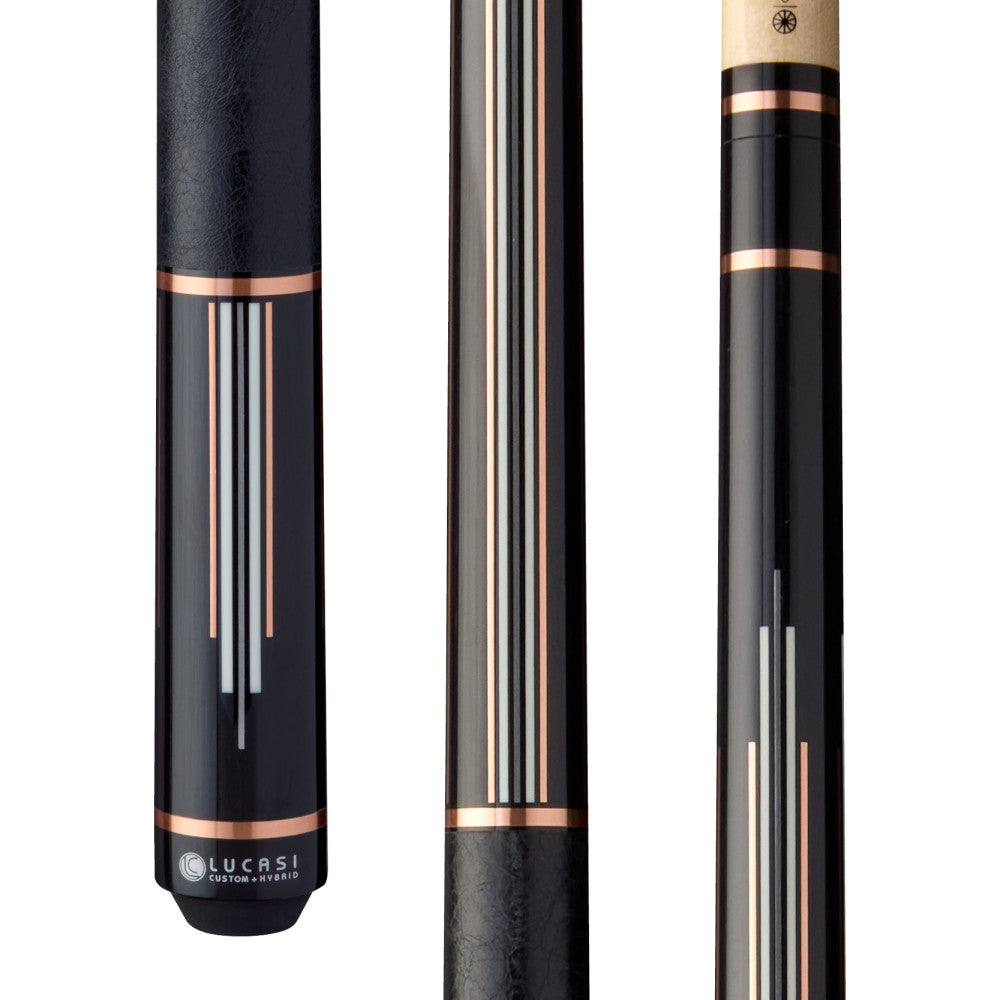
Ask a room full of serious players which cue brand delivers the most performance per dollar between five hundred and a thousand dollars, and Lucasi comes up every single time. The brand occupies a specific and valuable spot in the market: custom-shop looks and genuine low-deflection technology at prices well below what boutique cue makers charge for comparable builds. If you have been playing a production cue and feel ready for something that looks like a collector’s piece but performs like a modern tournament instrument, Lucasi deserves a hard look.
This guide walks through what actually separates Lucasi from the crowd, how the lineup is organized, and which model fits which kind of player, using cues currently on our shelves as the examples.
What Lucasi Actually Does Differently
Plenty of brands sell pretty cues. Lucasi’s argument is that beauty and technology should not be separate purchases, and the spec sheets back it up.
Low-Deflection Performance as Standard Equipment
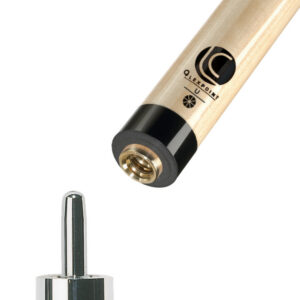
Cue ball deflection, or squirt, is the sideways push the cue ball takes when you strike it off-center. Cheaper cues with heavy, stiff shaft front ends produce more of it, forcing you to memorize compensating aim adjustments for every speed and spin combination. Lucasi builds its shafts to reduce end mass at the tip, and the flagship of that effort is the Zero Flexpoint shaft design. On a cue equipped with it, applying english moves the cue ball closer to where you actually aimed. The Lucasi Hybrid Zero Flexpoint 10-Splice Shaft with Uni-Loc joint is sold on its own for exactly this reason: players with Uni-Loc equipped cues buy it to modernize a butt they already love.
Hybrid Construction Where It Counts
The Hybrid series name refers to the blending of traditional wood construction with modern materials and stabilization, and the difference is easiest to feel in the hit: crisp feedback without the harshness of an all-composite cue. Features like the perforated Sport G5 grip found on the Hybrid Matte Titanium LH2 address a real problem, giving sweaty hands a secure hold without the sticky feel of cheap rubber wraps.
Custom-Shop Aesthetics at Production Prices
The Custom series is where Lucasi flexes. Exotic woods, intricate ring work, real inlay artistry. A cue like the Custom Art Deco Rose Gold and Silver would not look out of place in a glass case, yet it ships with the same modern playing shaft technology as the rest of the line. You are not choosing between a wall-hanger and a player. You are getting both in one purchase.
The Uni-Loc Advantage
Most of the current line uses the Uni-Loc quick-release joint, and it earns its popularity. The connection snaps together in a fraction of the turns a traditional threaded joint requires, seats with a solid, repeatable feel, and opens up an entire ecosystem of compatible shafts. That last point is the quiet win: a Lucasi butt with a Uni-Loc joint can accept aftermarket carbon fiber and hybrid shafts from multiple manufacturers, which means the cue you buy today can evolve with your game instead of being replaced by it.
How the Lucasi Lineup Is Organized
The model names get long, but the structure underneath is simple once you see it.
Hybrid Series: The Performance Core
These are the workhorses, generally in the six-hundred to thousand-dollar range, built around low-deflection shafts, Uni-Loc joints, and modern grip options. Colorways run from subtle to bold, and most models offer wrapless or leather-grip variants. If your priority is playing performance and you want a cue that will not need upgrading for a decade, start here.
Custom Series: Where Art Meets the Table
Antique-stained birdseye maple, cocobolo, zebrawood, embossed leather wraps. The Custom series cues on our shelves range from the mid five-hundreds up past a thousand dollars, and each one reads as a small-batch build. These play with the same technology as the Hybrids, so the choice between the two series is purely about how much of your budget goes to visual presence.
Pro Series: Traditional Profiles, Modern Guts
Ebony, rengas, and zebrawood butts with cleaner, more understated styling for players who want a classic look without giving up the modern shaft. These sit mostly in the six-hundred to twelve-hundred-dollar range and appeal to the player whose taste runs toward old-school Balabushka-era lines.
Jump and Break Tools
Lucasi also builds specialty cues that share the family DNA. The L-2000JB-1 Jump/Break Cue converts between a full break cue and a jump cue, which solves a practical problem for league players who do not want to carry three cues to Tuesday night sessions.
Which Lucasi Fits Your Game
Budget and aesthetics matter, but the honest way to choose is by what your game needs next.
If you are an improving league player moving up from a starter cue, a Hybrid series cue in the six-hundreds gives you the largest single performance jump, because going from a standard shaft to a low-deflection shaft changes how you aim spin shots. Expect an adjustment period of a few weeks while your brain recalibrates, and expect to make shots with english that used to be guesses.
If you already play a low-deflection setup and want a cue that turns heads at tournaments, the Custom series is the move. You lose nothing in performance and gain a cue you will still be proud of in twenty years.
Whichever series you land on, check three specs before you commit. Weight: most models ship in the nineteen-ounce range with weight-bolt adjustability, and players with a smooth, slower stroke often do better a half ounce heavier. Shaft diameter: the standard low-deflection shafts run in the twelve-and-three-quarter millimeter range, slimmer than old house cues, and the change takes a week of table time to feel normal. Wrap or wrapless: leather and linen wraps absorb moisture and add texture, while the wrapless and G5 grip models suit players who slide their grip hand during the stroke. None of these choices is wrong. All of them are personal, which is exactly why buying from a specialist shop beats gambling on a marketplace listing with no spec sheet.
If you are a traditionalist who thinks modern cues look like appliances, the Pro series ebony and rengas builds deliver the classic profile with none of the classic-era squirt. And if your break currently happens with your playing cue, stop. A convertible jump/break cue protects your playing tip and gives you a proper hard-tip break, and the L-2000JB-1 does both jobs for less than the cost of replacing a damaged playing shaft.
Featured Lucasi Products
-
-
-
-
-
-
-
-
Protecting the Investment
A cue in this class deserves basic care, and the habits are not complicated. Store it upright in a proper case, never leaned against a wall where the shaft slowly takes a set. Keep it out of the car in summer; heat cycles are the fastest way to ruin a wrap and destabilize a shaft. Wipe the shaft down after humid sessions, and have the tip professionally shaped rather than attacking it with a scuffer every week. A hard case with cue-specific compartments from our pool cue cases collection costs a fraction of what the cue did and doubles its working life.
It is also worth being honest about what a better cue will not do. No cue fixes a crooked stroke or bad pattern choices. What a Lucasi does is remove the equipment variables, the mystery squirt, the slick grip, the dead hit, so that every miss is honestly yours and every improvement you practice actually shows up on the table. Players underestimate how liberating that is until they feel it.
Browse the full range in our Lucasi cues category, or compare across brands in the complete pool cues collection. If you are torn between two models, reach out through the site and we will talk through your game, your budget, and which build actually suits both.

About Corey Bernstein
Corey Bernstein is a competitive pool player, billiards equipment specialist, and co-owner of Quarter King Billiards in Wilmington, North Carolina. With over a decade of experience in the sport, Corey has competed in regional APA and BCA sanctioned tournaments and maintains an intimate knowledge of cue construction, shaft technology, and table mechanics. As a certified dealer for brands including Predator, McDermott, Jacoby, Viking, Lucasi, Meucci, Joss, and Cuetec, Corey personally tests and evaluates every cue that comes through the shop. His hands-on approach to the business means he has racked thousands of hours behind the table — breaking in shafts, comparing tip compounds, and dialing in the nuances that separate a good cue from a great one. When he is not behind the counter or on the table, Corey is researching the latest advances in low-deflection technology, carbon fiber shaft construction, and cue ball physics. His articles on Quarter King Billiards combine real-world playing experience with deep product knowledge to help players at every level find the right equipment for their game.