 844 408 3056

 Hot Deal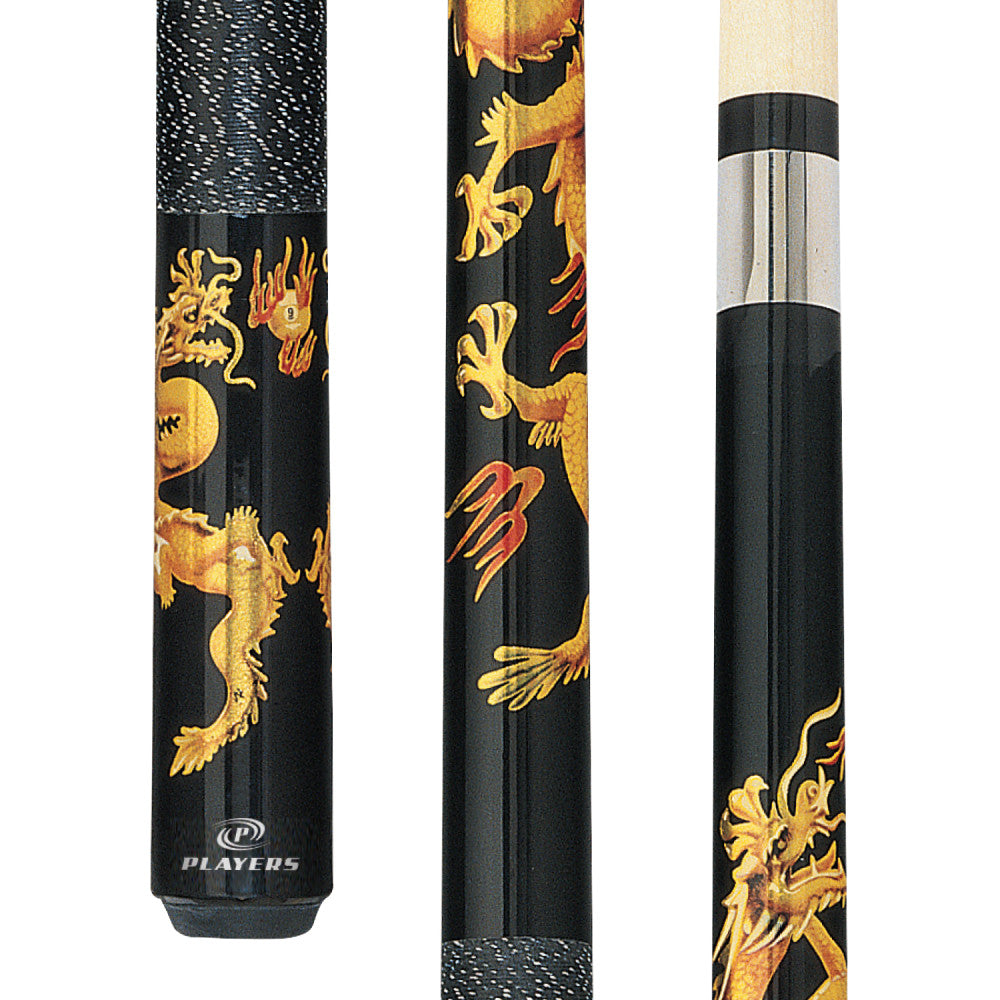
Every player remembers the first time a run died for no good reason. You made four balls in a row, felt unstoppable, and then looked up to find the cue ball trapped on the rail with no shot at the ball you needed. Nothing about your stroke failed. Your planning did. The difference between a player who runs three balls and a player who runs racks is almost never shotmaking. It is pattern play, the skill of choosing which ball to shoot and where to send the cue ball before you ever bend over the table.
The good news is that pattern play is learnable in a way that pure shotmaking is not. It is a thinking habit, and thinking habits respond to structure. This guide walks through the core ideas, the differences between 8-ball and 9-ball patterns, and three drills that build the vision faster than random practice ever will. It also covers the one equipment truth that makes all of this easier, because planning a two inch position zone only helps if your cue delivers the ball there.
What Pattern Play Actually Means
Pattern play is playing position for the next two balls, not just the next one. The standard rule taught by every serious instructor is the three ball rule: before you shoot, know your current shot, the ball after it, and the ball after that. Your position target for this shot is not a spot on the table. It is an angle on the next ball that makes the third ball easy.
That last sentence is the entire skill. Amateurs play position for distance, trying to get close to the next ball. Strong players play position for angle, because the angle determines where the cue ball can travel next. Getting straight in on a ball sounds ideal until you realize a perfectly straight shot leaves the cue ball nowhere to go without force. A modest cut angle is a steering wheel. Most of the time you want one.
The Tangent Line Is Your Map
The cue ball leaves every cut shot along the tangent line, the line perpendicular to the path of the object ball at contact. Hit the shot with a sliding cue ball, called stun, and the cue ball follows that tangent line exactly. Everything in position play is a variation on this single fact.
Stun, follow, and draw windows
Add topspin and the cue ball bends forward of the tangent line. Add draw and it bends behind the line. So every shot really offers you a fan of possible cue ball paths, hinged at the tangent line, opened forward by follow and backward by draw. Before each shot, picture that fan, then pick the slice of it that crosses your position zone. When a commentator says a pro has great cue ball control, what they mean is that the pro sees this fan instantly and can place the cue ball anywhere inside it at three different speeds.
Speed is the half of position play nobody practices enough. The tangent line tells you direction, but speed decides where along that path the cue ball stops. As a rule, direction errors are recoverable and speed errors compound, because a cue ball that runs three feet long turns your planned angle into a completely different rack.
Eight Ball Patterns vs Nine Ball Patterns
In 9-ball the pattern is chosen for you, lowest ball first, so the skill becomes route selection between fixed points. Pros favor routes that use natural angles, avoid crossing the table twice, and keep the cue ball away from other balls. In 8-ball you choose the order, which makes it the deeper pattern game. The guiding principles are to clear balls near your opponent’s traffic early, save a ball near the 8 as your insurance shot, and pick a key ball, the second to last ball that naturally feeds position on your final ball before the 8.
Deal with problem balls early
Every rack has one or two balls that are trouble, frozen to a rail, clustered, or parked in your opponent’s zone. The amateur instinct is to run the easy balls first and hope the problem solves itself. It never does. Strong players attack problems while they still have other balls on the table to recover with. If you cannot break a cluster out early with an insurance ball waiting, that is usually the moment to play safe instead of starting a run you cannot finish.
Three Drills That Build Pattern Vision
The first drill is the three ball ladder. Throw three balls on the table, take ball in hand, and run them in any order. Too easy? You must call the full pattern out loud before you shoot, including where the cue ball stops after each shot. When you can predict all three stopping points within a hand span, move to four balls. This drill trains the fan of paths described above better than anything else we know.
The second is the zone drill. Set up the same medium cut shot, place a piece of paper on the table as your position zone, and shoot the shot ten times trying to stop the cue ball on the paper. Shrink the paper as you improve. This isolates speed control on a fixed direction, which is exactly how position errors actually happen in games.
The third is playing ghost racks where you must run the balls in the worst order. It sounds backward, but forcing bad patterns teaches you to feel the difference between a natural route and a forced one, and that feel is what pattern vision really is. Ten minutes of each drill beats an hour of aimless racks.
Why Your Cue Matters More Than You Think
Pattern play asks you to hit the same shot at three speeds with predictable spin. That demands a cue with a consistent hit, a tip that holds its shape, and a shaft you have hit thousands of balls with. It does not demand a thousand dollar cue. This is exactly the argument for the Players cue line we carry: honest maple construction, clean joints, and finishes that survive league play, at prices between roughly $150 and $300 where a developing player should be spending.
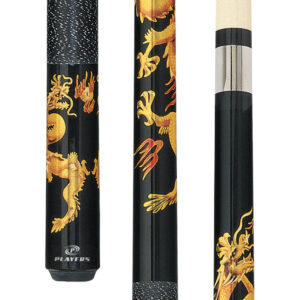
A cue like the Players Golden Dragons with black linen wrap gives you a stable platform to learn draw and follow windows without fighting the equipment, and the Brilliant Blue gloss wrapless model is one of the best first serious cues on our floor for the money. The point is not the specific model. The point is that pattern practice only compounds when every practice session happens with the same cue.
Featured Players Products
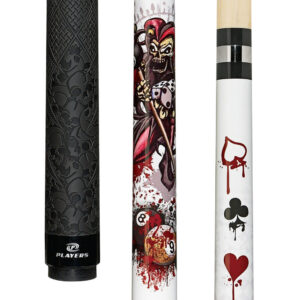
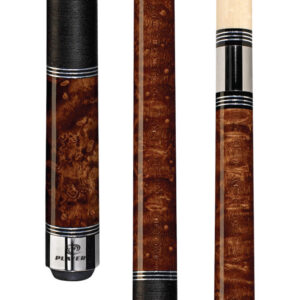
These four cues cover the range from first cue to league workhorse, all from the Players collection and all in stock now.
-
-
-
-
-
-
-

-
Putting It All Together
Start your next practice session with the three ball ladder and force yourself to announce patterns out loud. In your next match, before every shot, name the next two balls and the angle you want on each. You will feel slower for two weeks, and then one night you will look up mid rack and realize the whole runout is already mapped in your head. That is pattern play arriving, and it never leaves once it does.
One warning as you build the habit. Pattern play rewards honesty about your own range. A pro can draw the cue ball the length of the table into a coaster sized zone. You probably cannot yet, and pretending otherwise turns good plans into bad leaves. Choose routes that ask for the speeds you actually own, and let your ambition grow one clean session at a time. The plan that wins is the one your current stroke can execute nine times out of ten.
If your current cue changes its behavior every time the humidity moves, fix that variable first. Browse the full pool cue selection at Quarter King Billiards and put a consistent tool in your hands. The thinking part is free.

About Corey Bernstein
Corey Bernstein is a competitive pool player, billiards equipment specialist, and co-owner of Quarter King Billiards in Wilmington, North Carolina. With over a decade of experience in the sport, Corey has competed in regional APA and BCA sanctioned tournaments and maintains an intimate knowledge of cue construction, shaft technology, and table mechanics. As a certified dealer for brands including Predator, McDermott, Jacoby, Viking, Lucasi, Meucci, Joss, and Cuetec, Corey personally tests and evaluates every cue that comes through the shop. His hands-on approach to the business means he has racked thousands of hours behind the table — breaking in shafts, comparing tip compounds, and dialing in the nuances that separate a good cue from a great one. When he is not behind the counter or on the table, Corey is researching the latest advances in low-deflection technology, carbon fiber shaft construction, and cue ball physics. His articles on Quarter King Billiards combine real-world playing experience with deep product knowledge to help players at every level find the right equipment for their game.