 844 408 3056

 Hot Deal
Most missed shots die before the cue ever moves. The ball rattles out or drifts off line, and the player blames aim, or the tip, or the table roll. Watch their feet and hands instead. Nine times out of ten the miss was built into the setup: hips fighting the shot line, weight lurching during the stroke, a bridge that let the cue drift a few millimeters sideways at contact. Stance and bridge are the least glamorous parts of pool, which is exactly why fixing them improves your game faster than any aiming system ever will.
This guide covers the stance fundamentals that create a repeatable stroke, the four bridges every player needs to own, and the honest truth about the mechanical bridge, a piece of equipment American players avoid out of pride and European players use to win championships.
Build Your Stance From the Feet Up
A good stance accomplishes three things: it puts your cue on the shot line, it keeps your body stable while the cue moves, and it does both the same way every single time. The details vary with height and build, but the principles do not.
Find the Shot Line Before You Bend
Stand behind the shot fully upright and pick out the line from cue ball to target. Your back foot steps onto that line, angled comfortably outward. Your front foot steps forward and slightly to the side, about shoulder width, so your hips clear a path for the cue. The critical habit is stepping into the line rather than bending down first and steering the cue afterward. Players who settle into their stance and then adjust their aim are re-aiming with their forearm, and the stroke pays for it.
Let Your Weight Settle and Stay
Distribute weight so you feel planted, roughly balanced between both feet with a slight bias toward the front. Here is a test worth doing with a friend: get down on a shot and have them gently push your shoulder. If you wobble, your base is too narrow or your weight is on your heels. Nothing should move during your stroke except your forearm, and that is only possible when the platform underneath it is still.
Get Your Head Where Your Eyes Work
Chin low over the cue is the modern standard, but the real requirement is consistency. Snooker players touch chin to cue on every shot precisely because it removes a variable. Find the head height where both eyes see the shot line clearly, then reproduce it on every shot, whether it is a hanger or a table-length cut.
The Four Bridges Every Player Must Own
Your bridge hand is the front sight of your stroke. A bridge that flexes, slides, or sits at the wrong height sends the tip somewhere you did not aim it, and no amount of stroke work compensates for a wandering front end.
The Open Bridge Is Your Default
Knuckles down, fingers spread, thumb pressed against the base of your index finger to form a channel for the cue. The open bridge gives you the clearest sight line down the shaft and suits the soft-to-medium speed shots that make up most of a rack. Keep the heel of your hand planted; the most common open-bridge fault is a floating heel that turns your bridge into a hinge.
The Closed Bridge Adds Security for Power
Loop your index finger over the shaft and let the cue ride on the middle finger’s first knuckle. The closed bridge shines on the break, on hard draw shots, and any time you load the cue with speed, because the loop prevents the shaft from lifting off the bridge during a long, fast stroke. The tradeoff is a partially blocked sight line, which is why forcing a closed bridge on every shot, as many American players learned to do, costs precision on delicate shots. Use it when power demands it.
The Rail Bridge Nobody Practices
When the cue ball sits near a cushion, place your hand flat on the rail, trap the shaft between thumb and index finger, and keep the cue as level as the situation allows. Rail shots feel awkward because players meet them a handful of times per session and never drill them deliberately. Spend ten minutes placing the cue ball a chalk-width off the rail and shooting long straight-ins. The discomfort fades fast, and rail shots stop being automatic errors.
The Elevated Bridge for Shooting Over Balls
When an obstructing ball forces you to raise the cue, form a tripod on your fingertips and brace the shaft against your thumb, keeping contact with the cloth using as many fingertips as you can. Grip lighter than feels natural and shorten your stroke. Elevation multiplies every stroke flaw, so your goal on these shots is a clean, short punch, not a full swing.
The Mechanical Bridge Is a Skill, Not a Surrender
Somewhere along the way, American pool culture decided that reaching for the rake was embarrassing. Meanwhile, professional players simply use it and pocket the ball. A stretched shot where your bridge hand barely reaches is a low-percentage gamble; the same shot with a mechanical bridge is routine once you have practiced the technique.
Using it well takes about an hour of honest practice. Lay the bridge head flat on the cloth, hold the handle down with your non-shooting hand, grip the cue butt with your fingertips like a dart, and stroke with your elbow, keeping the motion short and level. Chest-high, sidearm, no body english. Set up ten long shots you cannot comfortably reach and shoot them with the bridge every practice session for two weeks. The shot stops feeling like an emergency and starts feeling like ball in hand. As a bonus, once the rake stops scaring you, your shot selection improves everywhere else, because you stop contorting into stretched, unstable stances just to avoid reaching for it.
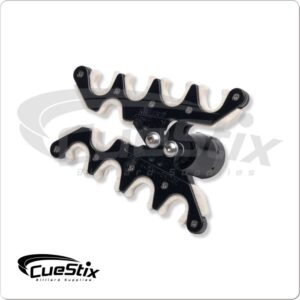
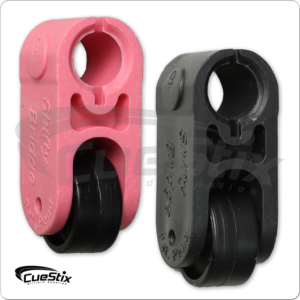
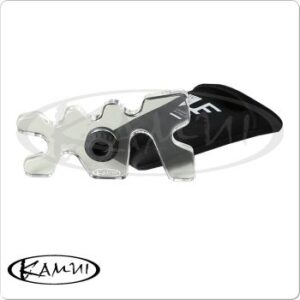
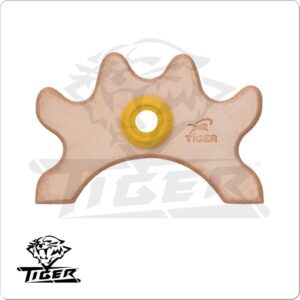
Modern bridge heads have come a long way from the bent metal rake hanging under the house table. The Kamui VUE Bridge Head uses a transparent design so you can sight the shot through the head itself, and the Justa-Bridge Adjustable Bridge Head reconfigures for standard, elevated, and over-ball positions. Leather options like the Tiger Corona Leather Bridge Head protect the cloth and grip the shaft cleanly, while the Shifty Bridge gives you multiple cradle heights in one compact head. Any of these screws onto a spare butt or house cue, which means a proper bridge setup costs less than a set of tips. Our full selection lives in the bridge heads category.
While you are fixing your bridge, consider your bridge hand itself. On humid nights a sticky bridge ruins otherwise sound fundamentals, which is why so many pros now wear a glove. Options in our billiard gloves category solve the problem for under thirty dollars. And if your current cue’s shaft diameter fights your bridge, our pool cues collection spans every shaft size and taper on the market.
Featured Bridge Head Products
-
-
-
-
Shifty BHSB1 Bridge
$19.95 Select options This product has multiple variants. The options may be chosen on the product page -
-
-
-
A Two-Week Fundamentals Reset
Here is a plan that rebuilds your platform without boring you to death. Week one, spend the first fifteen minutes of every session on straight-in shots at medium speed, focusing only on stepping into the line and holding your finish until the object ball drops. Film yourself from behind once during the week; the camera will show you body movement you cannot feel. Week two, keep the straight-in warmup but add ten rail-bridge shots and ten mechanical-bridge shots per session. Nothing about this plan is exciting. Everything about it shows up in your league stats within a month.
Great players are not great because they make spectacular shots. They are great because their setup makes ordinary shots automatic, hundreds of times per match, under pressure. Steal that. The spectacular stuff can come later.

About Corey Bernstein
Corey Bernstein is a competitive pool player, billiards equipment specialist, and co-owner of Quarter King Billiards in Wilmington, North Carolina. With over a decade of experience in the sport, Corey has competed in regional APA and BCA sanctioned tournaments and maintains an intimate knowledge of cue construction, shaft technology, and table mechanics. As a certified dealer for brands including Predator, McDermott, Jacoby, Viking, Lucasi, Meucci, Joss, and Cuetec, Corey personally tests and evaluates every cue that comes through the shop. His hands-on approach to the business means he has racked thousands of hours behind the table — breaking in shafts, comparing tip compounds, and dialing in the nuances that separate a good cue from a great one. When he is not behind the counter or on the table, Corey is researching the latest advances in low-deflection technology, carbon fiber shaft construction, and cue ball physics. His articles on Quarter King Billiards combine real-world playing experience with deep product knowledge to help players at every level find the right equipment for their game.