 844 408 3056

 Hot Deal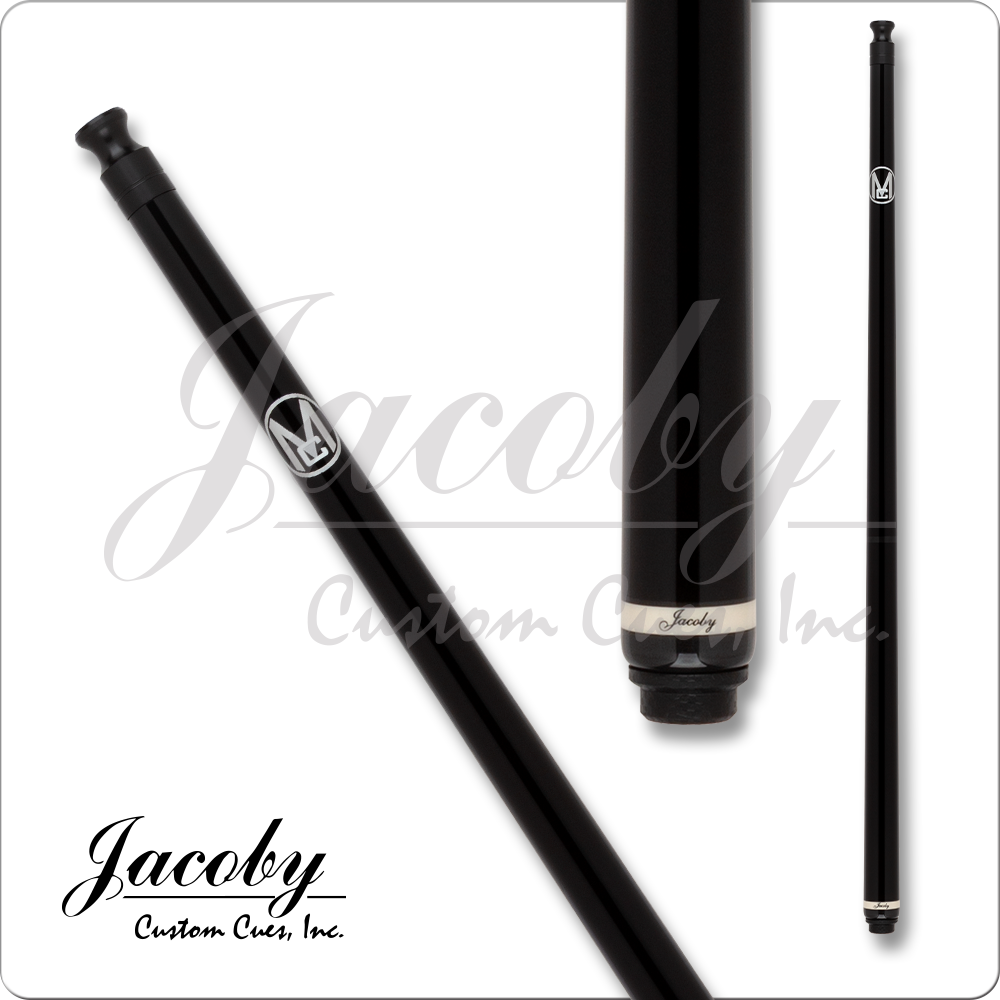
Ho Chi Minh City turns into the center of professional pool tomorrow. The Predator Pro Billiard Series, working with Box Billiards, has stacked three international events into eight days running September 19 through 26, 2026, with a combined prize fund of $490,000. The centerpiece is the 2026 Iwan Simonis WPA Men’s 10-Ball World Championship, worth $300,000 on its own, and the rest of the week fills in around it.
Vietnam has hosted Pro Billiard Series events before and the crowds there treat pool the way American crowds treat playoff basketball. That matters for what you will see on the stream. Players who are used to quiet rooms have to run out with noise behind them, and the ones who handle it tend to be the ones still playing on day eight.
Three Events, One Room, Eight Days
The schedule is tight and the formats overlap, so here is how the week actually stacks up.
The 2026 BOX BILLIARDS Mixed Doubles Open opens the festival September 19 through 23 with a $110,000 prize fund. Mixed doubles pairs leading male and female players on the same side of the table, alternating shots, which turns every safety decision into a conversation. It is the most watchable format in the sport for people who do not follow pool closely, because you get to hear the strategy instead of guessing at it.
The 2026 IWAN SIMONIS WPA Men’s 10-Ball World Championship runs the full September 19 through 26 window for that $300,000 fund. Eight days is a long grind. Players who peak early and burn out in the middle rounds do not survive it.
The 2026 POISON SAIGON Women’s 9-Ball Open lands in the middle, September 21 through 25, with $90,000 on the line and an elite international field.
The partner list tells you something about the standard of equipment in the arena: Yalin, Predator, Little Monster, Kamui, Box Billiards, Iwan Simonis, Aramith, VenBilliards, Pro Billiard TV and the World Pool Association. Simonis cloth and Aramith balls are the reference point for professional play, which means the rolls you see on the broadcast are about as honest as a pool table gets.
Why 10-Ball Is the Hardest Rotation Game to Win
Nine-ball gets the television time, but 10-ball is the format the professional tour uses when it wants to find out who is actually playing well. The difference comes down to two rules.
First, 10-ball is a call-shot game. You name the ball and the pocket. A ball that rattles into a different pocket does not count and the incoming player gets a choice. In 9-ball, slop counts, and over a long race that slop adds up to matches decided by luck. Take it away and the winner is usually the better player.
Second, the rack has ten balls in a triangle instead of nine in a diamond, so the break spreads differently and the one ball sits at the apex with two balls behind it rather than one. Wing balls do not fall as reliably. Breaking dry or breaking and hooking yourself happens far more often, and that puts a premium on the safety game right from the opening shot.
The Break Becomes a Control Problem
Watch the first two days of the men’s championship and count how many players smash the rack. You will not need many fingers. At this level the break is about making a ball, keeping the cue ball near center table, and leaving the one ball accessible. Raw speed scatters balls into clusters and puts the cue ball somewhere random, and randomness is what a call-shot game punishes.
League players can copy this directly. Drop your break speed to roughly eighty percent of maximum, hit the head ball dead full, and use a touch of draw or nothing at all so the cue ball stalls in the middle of the table. You will make fewer spectacular breaks and win more racks.
Safeties Are Not Defense, They Are Offense
When a 10-ball pro cannot see a clean runout, the shot is not a low percentage cut. It is a two-way shot or a lock-up safety that leaves the opponent kicking at a ball behind traffic. Over a race to eleven, three good safeties are worth more than one heroic table run. The players who advance in Saigon will be the ones who accept a bad layout without trying to shoot their way out of it.
The Equipment Behind a Control Break
If the break in 10-ball is a control problem rather than a power problem, the break cue has to be built for control. That means a stiff shaft that transfers energy without flexing, a hard tip that does not grab and add unintended spin, and a weight the player can repeat without muscling it.
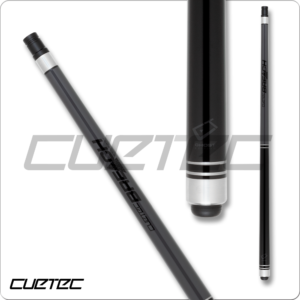
Carbon fiber took over this category even faster than it took over playing cues, and for a straightforward reason. A carbon break shaft does not warp, needs no maintenance, and delivers the same hit on the five hundredth break as on the first. The Jacoby Monster Crush in black is built around exactly that idea, with a no-wrap grip that keeps the hand from sliding on a hard stroke. The Cuetec Cynergy CT146 Ghost pairs Cuetec’s carbon platform with a break-specific tip, and it is one of the more common break cues on a tournament floor.
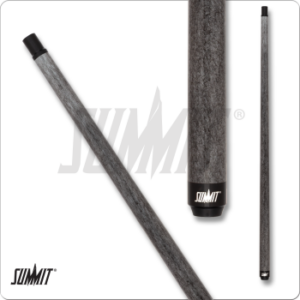
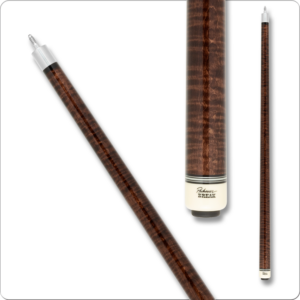
You do not have to spend that much to get the important part. The Pechauer JPBRKRS is a traditional maple break from a shop that has been building them for decades, and it hits harder than its price suggests. The Summit SUML21 carbon fiber break brings a carbon shaft down into the range where a league player can justify it.
Whichever you pick, settle on one weight and stay with it. Break speed is a timing skill, and timing does not transfer between a 19-ounce cue and a 25-ounce cue.
Featured Break Cues
-
Sale!
-
Summit SUML21 Grey Carbon Fiber Break Cue
Original price was: $499.00.$449.10Current price is: $449.10. Select options -

-
-
Sale!
-
Cuetec Cynergy CT146 Ghost Break Cue
Original price was: $829.00.$749.00Current price is: $749.00. Select options This product has multiple variants. The options may be chosen on the product page -
Sale!
-
Pechauer JPBRKRS Break Cue
Original price was: $390.00.$351.00Current price is: $351.00. Select options This product has multiple variants. The options may be chosen on the product page
Three Things to Steal From the Broadcast
Watch where the cue ball stops, not where the object ball goes. Every amateur watching a pro match tracks the object ball into the pocket. The information is in the cue ball. Pick one player, follow only the white for a full rack, and you will see how small their position zones actually are. They are not trying to land on a spot. They are trying to land anywhere inside a two-foot window with the correct angle on the next ball.
Count how often they shoot with no english. It will be more than you expect. Center ball with the right speed solves most position problems and introduces no deflection error. Sidespin is the last tool out of the box, not the first.
Notice the pre-shot routine under pressure. At hill-hill in a world championship, the routine does not get faster. It gets slower and more deliberate. If you find yourself rushing when a match tightens up, you are doing the exact opposite of what the best players in the world do.
What Half a Million Dollars in One Week Signals
Prize money is the clearest read on where a sport is healthy. A combined $490,000 across eight days in Southeast Asia, with a men’s world championship carrying $300,000 by itself, is not a token purse. It is enough that players will cross oceans on their own dime for a shot at it, which is what produces a real field rather than a regional one.
Two details are worth noting beyond the headline number. The mixed doubles event carries $110,000, more than the women’s 9-ball open at $90,000, which reflects how much that format has grown as a broadcast product. And staging the women’s event inside the same week as the men’s world championship, in the same arena, on the same equipment, puts both fields in front of the same audience instead of relegating one to a separate weekend nobody streams.
For a sport that has spent decades fragmented across competing tours and inconsistent formats, a week like this one in Ho Chi Minh City is what consolidation looks like when it works.
How to Follow the Week
Pro Billiard TV carries the events, and the Pro Billiard Series channels post results and highlights throughout the week. With the mixed doubles starting the same day as the men’s championship, the first weekend is the busiest stretch, and the women’s 9-ball open joins on September 21. If you only have time for one session, the closing days of the 10-ball championship are where the pressure is highest.
If watching world-class rotation pool makes you want to fix your own break, start there rather than with a new playing cue. A dedicated break cue protects the tip and ferrule on your good cue and gives you a consistent tool for the one shot in every rack that sets up everything after it. Browse the full break cue selection, or step back and compare across the whole pool cues catalog.

About Corey Bernstein
Corey Bernstein is a competitive pool player, billiards equipment specialist, and co-owner of Quarter King Billiards in Wilmington, North Carolina. With over a decade of experience in the sport, Corey has competed in regional APA and BCA sanctioned tournaments and maintains an intimate knowledge of cue construction, shaft technology, and table mechanics. As a certified dealer for brands including Predator, McDermott, Jacoby, Viking, Lucasi, Meucci, Joss, and Cuetec, Corey personally tests and evaluates every cue that comes through the shop. His hands-on approach to the business means he has racked thousands of hours behind the table — breaking in shafts, comparing tip compounds, and dialing in the nuances that separate a good cue from a great one. When he is not behind the counter or on the table, Corey is researching the latest advances in low-deflection technology, carbon fiber shaft construction, and cue ball physics. His articles on Quarter King Billiards combine real-world playing experience with deep product knowledge to help players at every level find the right equipment for their game.