 844 408 3056

 Hot Deal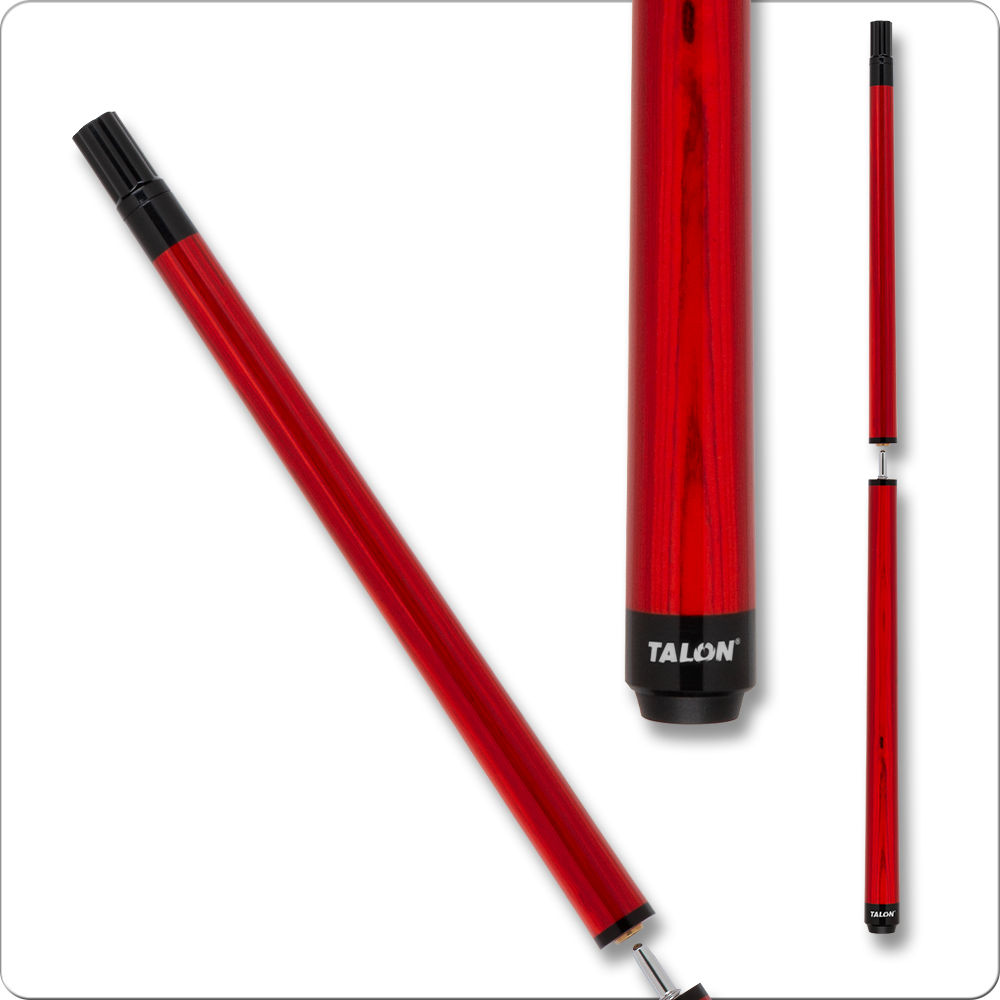
A blocker sits between your cue ball and the shot you need. Most players groan, play a weak kick, and hope. A jump shot turns that same trap into an offensive opportunity, and once the technique clicks, it stops feeling like a circus trick and starts feeling like a normal tool in the box. The catch is that a jump has to be done legally, and plenty of players who think they are jumping the ball are actually fouling every time.
Let us fix that. Here is how a legal jump actually works, when it beats a kick, and what to look for in a cue built for the job.
What Makes a Jump Legal
The core rule is straightforward and it is the same idea across the major rule sets. You must strike the cue ball on its upper half and drive it down into the cloth, letting it rebound up off the bed of the table. The table does the lifting, not your cue. What you cannot do is dig the tip under the cue ball and scoop it into the air. Scooping is a foul, and it is the single most common mistake among players who never learned the shot properly.
If you have ever slid the tip beneath the ball to pop it up, that felt easy for a reason: it is illegal. Once you commit to hitting down on the top of the cue ball, the shot becomes a genuine skill, but it also becomes legal in the formats that allow jump cues at all. That distinction matters, so before you build the shot into your game, confirm what your league permits. Some formats allow a jump cue freely, some require you to jump with your playing cue, and a few ban the jump outright. Check the rule book you actually compete under rather than assuming.
Jump or Kick: Making the Right Call
Not every blocker calls for a jump. A kick shot, where you go rail-first to reach the object ball, is often the higher-percentage answer when the blocker is close to the cue ball or when you only need to make contact for a hit. The mirror system and other kicking methods give you a repeatable way to find the contact, and a kick keeps the cue ball on the table where you have more control over what happens after contact.
The jump earns its place when the blocker is far enough away that you have room to come down and back up before reaching the object ball, and when you need to actually pot a ball or get a clean, controllable hit that a kick cannot deliver. A good rule of thumb: if the interfering ball is more than roughly a ball and a half away from the cue ball, a jump becomes realistic. Any closer and you are fighting physics. The tighter the gap, the more the odds tilt back toward a kick or a safety.
The Stroke, Step by Step
Start by elevating the back of the cue. For a mid-range jump, an angle around 45 degrees is a sensible default, steeper for balls closer to you and shallower for longer jumps. Build a stable bridge, either an open hand pressed firmly to the cloth or a tripod bridge that raises the cue’s front end. Keep your grip relaxed and let the cue hang.
Aim your tip at a spot on the upper portion of the cue ball, not the equator and never below it. The stroke itself can be a compact dart stroke from above, using mostly forearm and wrist, or a shorter version of your normal stroke depending on how much distance you need. Accelerate smoothly and stop. A short, crisp follow-through beats a long lunge, because you are trying to compress the ball into the cloth, not push it forward.
The most common fault after scooping is trying to hit too hard. Power is not what gets the ball up. Clean downward contact and a firm, hard tip do the work. If your jumps are dying into the blocker, the problem is usually contact point or a mushy tip absorbing your energy, not a lack of muscle.
Featured Jump Cues
-
-
-
-
-
-
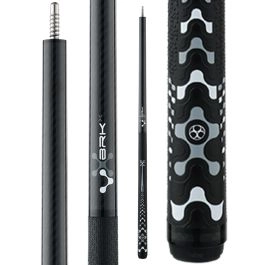
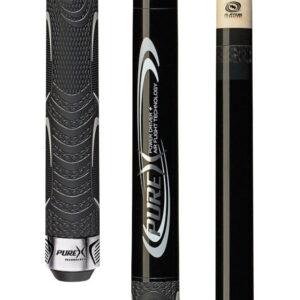
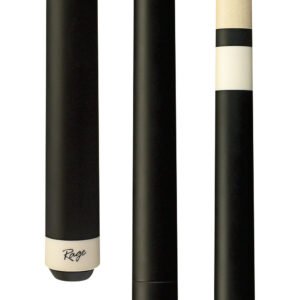
A dedicated jump cue is short and light with a hard phenolic or composite tip, and those traits are what make the shot repeatable. The Talon TLBJ01 Break Jump Cue is a friendly place to start, doubling as a break cue so you get two tools in one purchase. The Rage Heavy Hitter leans into break duty with real mass while still handling jumps. For players who want carbon fiber performance, the Poison VX Jump/Break with Venom carbon shaft is a serious step up, and the Pure X HXT 5-in-1 converts between break and jump lengths so you can dial in the exact feel you want.
Why Cue Length and Tip Matter So Much
Short cues jump better because you can generate a steep downward angle without the butt of the cue hitting your own body or the rail. That is why most jump cues sit in the 40 to 42 inch range or break down even shorter. The hard tip matters just as much. A soft tip flattens on contact and soaks up the energy you need to drive the ball into the cloth, while a phenolic or hard composite tip transfers that energy sharply and pops the ball up cleanly.
This is also why trying to jump with a full playing cue is so hard. The length works against your angle and the soft playing tip fights the shot. If your league requires jumping with your playing cue, expect a real learning curve and practice the steeper hand-bridge technique that raises the front end. If a jump cue is allowed, the right tool removes most of the difficulty.
Three Mistakes That Kill Jump Shots
The first killer is scooping, and it hides in plain sight because it feels effective. If your jumps pop up instantly with almost no effort, check your contact point, because you are probably fouling by digging under the ball. Retrain yourself to strike above the equator even though it feels harder at first. Legal jumps take more skill precisely because they are legal.
The second is over-elevating for long jumps. Beginners tend to jack up steeply for every jump, which is right for a close blocker but wrong when the object ball is far away. A steep angle sends the cue ball up and back down quickly, so it lands short. For distance, flatten the angle so the ball travels on a longer arc. Learning to vary elevation with the gap is the single biggest jump in jump-shot skill.
The third is a tense grip. A jump is a finesse action disguised as a power move. Choke the cue and you kill the crisp acceleration that pops the ball cleanly. Let the cue sit loosely, accelerate through your contact point, and stop. The cue and the cloth do the work when you let them.
Drills That Build the Shot Fast
Set an object ball a few inches past a blocker and give yourself a wide-open pocket. Jump the blocker and simply try to make solid, legal contact first, ignoring whether the object ball drops. Once ten in a row clear the blocker cleanly, start calling pockets. Then vary the distance so you learn how angle and speed change with the gap. Twenty focused minutes a couple of times a week will move a jump from panic move to reliable option quicker than almost any other shot in the game.
When you are ready to round out a full arsenal, pair your jump cue with a proper break cue and your everyday playing cue by browsing the wider pool cues collection. A three-cue setup, playing, breaking, and jumping, is how serious league and tournament players protect their main shaft and keep every specialty shot sharp.
The Payoff
A legal jump changes how opponents play safe against you. Once they know you can clear a blocker and still pot the ball, the easy hook loses its teeth, and you take away one of the safest tools in their box. That psychological shift is worth as much as the shots you make. Learn the downward strike, respect the legality, choose a cue built for the job, and the jump stops being intimidating. It becomes yours.

About Corey Bernstein
Corey Bernstein is a competitive pool player, billiards equipment specialist, and co-owner of Quarter King Billiards in Wilmington, North Carolina. With over a decade of experience in the sport, Corey has competed in regional APA and BCA sanctioned tournaments and maintains an intimate knowledge of cue construction, shaft technology, and table mechanics. As a certified dealer for brands including Predator, McDermott, Jacoby, Viking, Lucasi, Meucci, Joss, and Cuetec, Corey personally tests and evaluates every cue that comes through the shop. His hands-on approach to the business means he has racked thousands of hours behind the table — breaking in shafts, comparing tip compounds, and dialing in the nuances that separate a good cue from a great one. When he is not behind the counter or on the table, Corey is researching the latest advances in low-deflection technology, carbon fiber shaft construction, and cue ball physics. His articles on Quarter King Billiards combine real-world playing experience with deep product knowledge to help players at every level find the right equipment for their game.