Two family cue shops in Wisconsin have been quietly supplying American pool players for a combined ninety years. One started in 1963, the other in 1982. Both build cues that cost between roughly $325 and $500 in their entry lines, both use maple, and both have a devoted following that will argue with you about the other one. If you have $400 and want an American made cue that you will still be playing with in ten years, Pechauer and Jacoby are the two names that keep coming up.
They are not the same cue, though. They are built around different ideas about what a player should feel, and the difference shows up in the first half hour of hitting balls.
Pechauer: Green Bay, 1963, and the Speed Joint
J. Pechauer Custom Cues has been in Green Bay since Jerry Pechauer started building in 1963, and every cue still comes out of that shop. The company runs two main production lines. The JP Series is the accessible tier. The Pro Series, identified by an R in the model number, steps up in inlay work, appointments and price.
The piece both lines share is the Speed Joint, Pechauer’s own shaft to butt connection, and the ICE shaft technology in current production shafts. What matters at the table is the feedback. A Pechauer tells you a great deal about the hit. Players who want to feel the ball leave the tip tend to end up here, and players who prefer a muted, insulated hit usually do not.
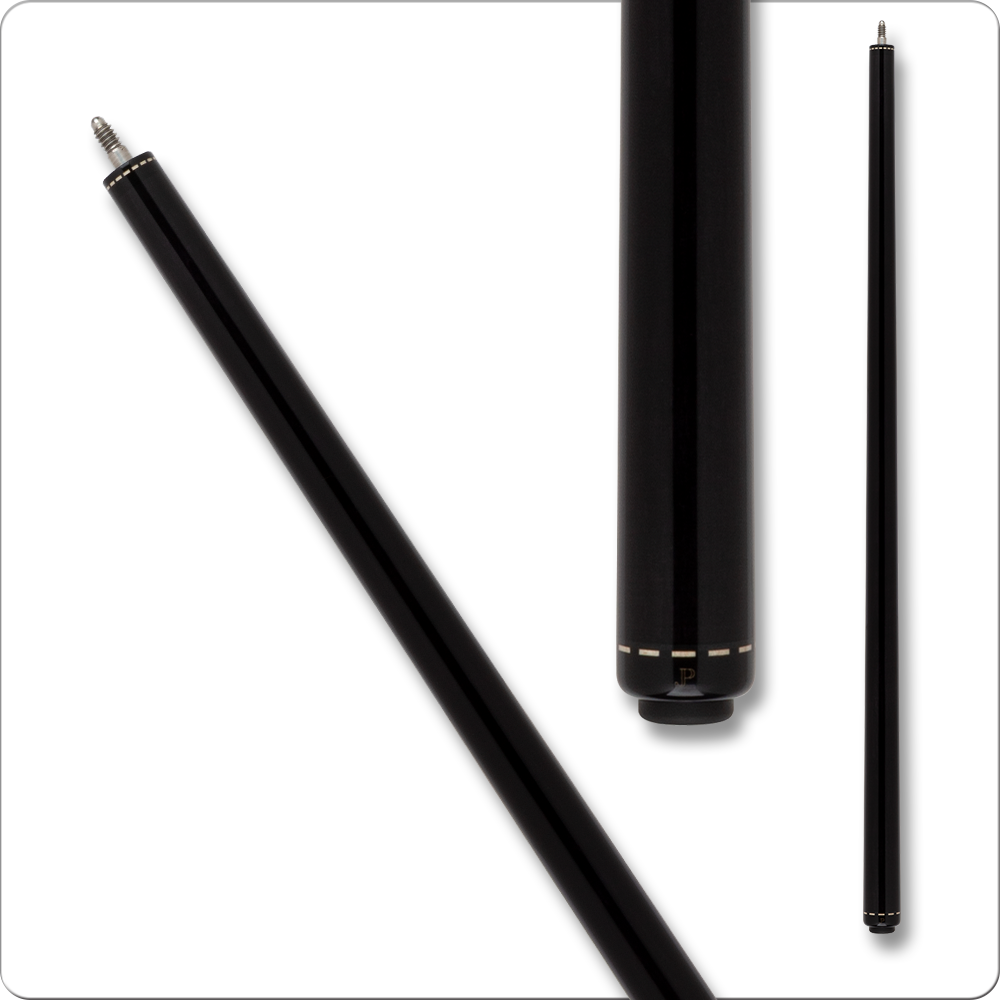
Take the Pechauer JP25R04 Pro Series cue at $450 as the concrete example. It carries a 29 inch hard rock maple shaft with a 10 to 12 inch pro taper, a 12.75 mm Pechauer Jade Medium tip, a 5/8 inch Juma ferrule, and the Pechauer Speed joint. The forearm is ebony stained figured maple with a smoke stained maple handle, the butt sleeve matches, it is made in the USA, and it carries a lifetime warranty. That spec sheet at $450 is a serious value proposition, and the lifetime warranty is not marketing decoration when the shop that honors it has been in the same city for six decades.
Jacoby: Nekoosa, 1982, and shafts as the main event
Jacoby Custom Cues builds in Nekoosa, Wisconsin, family owned since 1982, and the company’s reputation was built as much on shafts as on cues. The Ultra Pro is a high performance maple shaft with internal construction designed to cut tip end mass, which is how you get low deflection behavior without giving up a wood hit. The Edge Hybrid goes further, wrapping a carbon fiber core in select maple so the cue deflects less while still sounding and feeling like timber.
That focus tells you something about the buying decision. With Jacoby you are often choosing a platform you intend to upgrade. Buy the butt you like now, add the shaft that suits your game later, and you have effectively built a custom cue in two steps instead of paying for it all at once. The MAG series is the entry point into that path, and it exists specifically to get Jacoby construction into the hands of players who are not spending four figures.
Featured Pechauer and Jacoby Products
Here are the four cues that define this comparison, two from each shop, all in stock. Prices run from $324 to $475, which is the exact window where most players make their one serious cue purchase.

The four cues, side by side
The Pechauer JP2501 JP Series cue at $324 is the cheapest way into the Green Bay shop. It is a playing cue on a classic wood shaft with ICE shaft technology, and it is the one to buy if you want the Pechauer hit and do not care about inlay work. Step to the JP25R04 at $450 and you are paying for the Pro Series appointments and the figured maple, not a different hit.

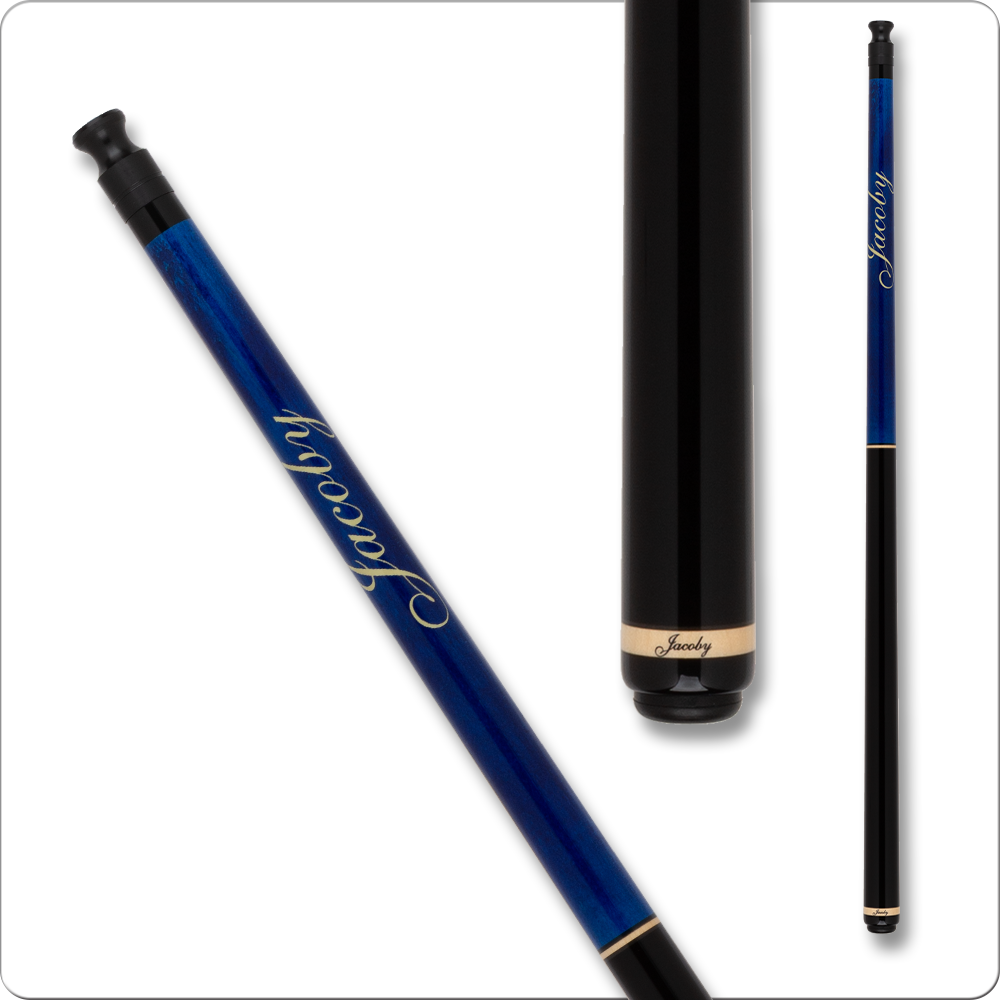
On the Jacoby side, the Jacoby JCBMAG1 at $375 and the Jacoby JCBMAG2 at $475 are both MAG series playing cues on classic wood shafts, each offered in a run of colors including blue, red, purple, pink, brown, gray, green and black. The color options are not a gimmick. Being able to find your own cue instantly on a crowded rack is a small thing that regulars appreciate, and the MAG finishes hold up better than the clear coat on most cues in this price range.
What $400 does not buy you
Being honest about the ceiling here matters. At this price, from either shop, you are getting a well built maple cue with a good joint and clean workmanship. You are not getting a carbon fiber shaft, and you are not getting the deep inlay work that pushes cues past four figures. Anyone telling you a $400 cue plays identically to a $1,500 cue is selling something, and anyone telling you the $400 cue is holding back your game is also selling something.
What you are buying instead is consistency and repairability. Both shops will retip, refinish and service their own cues, and both build to tolerances that mean the cue you get is straight and stays straight if you store it properly. Compare that to the $150 import bracket, where the wood is younger, the joint is usually a generic 5/16 by 18, and a warped shaft means you buy another cue rather than send it in.
One practical warning on upgrade plans. Joint pins are not universal, so a shaft built for one brand’s pin will not thread into another brand’s butt without an adapter or a conversion, and adapters change the balance and the hit. If your long term plan involves a specific aftermarket shaft, confirm the pin and the joint face before you buy the butt. That one phone call saves the most common expensive mistake in this hobby.
How to actually choose
Buy Pechauer if feedback is what you want. If you learn by feel, if you like knowing from the sound and the vibration that you caught the ball slightly left of center, the Speed Joint build will teach you faster. The lifetime warranty and the six decades of continuous production also mean parts and service are not a question.
Buy Jacoby if you plan to upgrade the shaft. If you suspect you will want a low deflection shaft within a year or two, starting on a MAG and adding an Ultra Pro or an Edge Hybrid later is a cleaner path than buying an all in one cue and then buying a second cue. You end up with one butt you know well and a shaft that matches how you have developed.
Ignore the weight debate. Both shops build in the standard 18 to 21 ounce range, and neither choice will fix or ruin your stroke. Spend that decision energy on the joint and shaft question instead, since that is what actually changes how the cue plays.
One thing applies to both. A $400 cue deserves a case, because the most common way players destroy a cue in this price range is leaving it in a car through a Wisconsin winter or a Texas summer. Warped shafts are not a warranty claim, they are a storage problem, and a hard case costs a fraction of a replacement. The cue case selection covers the 2×2 and 3×5 configurations most league players need, and the full pool cue catalog is there if neither of these two shops is quite your fit.
The short version
Both are American made, both are family run, both will outlast the player who buys them. Pechauer gives you feedback and a lifetime warranty from a shop that has been in Green Bay since 1963. Jacoby gives you a platform and the best shaft upgrade path in this price bracket out of Nekoosa. Hit both if you can. If you cannot, buy the one whose philosophy matches how you intend to improve, and stop reading forum threads about it.

About Corey Bernstein
Corey Bernstein is a competitive pool player, billiards equipment specialist, and co-owner of Quarter King Billiards in Wilmington, North Carolina. With over a decade of experience in the sport, Corey has competed in regional APA and BCA sanctioned tournaments and maintains an intimate knowledge of cue construction, shaft technology, and table mechanics. As a certified dealer for brands including Predator, McDermott, Jacoby, Viking, Lucasi, Meucci, Joss, and Cuetec, Corey personally tests and evaluates every cue that comes through the shop. His hands-on approach to the business means he has racked thousands of hours behind the table — breaking in shafts, comparing tip compounds, and dialing in the nuances that separate a good cue from a great one. When he is not behind the counter or on the table, Corey is researching the latest advances in low-deflection technology, carbon fiber shaft construction, and cue ball physics. His articles on Quarter King Billiards combine real-world playing experience with deep product knowledge to help players at every level find the right equipment for their game.
