 844 408 3056

 Hot Deal
Walk into any serious pool room in America and count the McDermotts. The Wisconsin cue maker has been building in the USA since the 1970s, and its cues occupy a rare position in the market: respected enough that no one questions the name on your butt sleeve, yet spread across a price range wide enough that a first-time buyer and a lifelong collector can both walk away happy. That range is exactly what confuses shoppers. When the same brand sells a sneaky pete for $468 and an anniversary cue for $2,450, what does each step up the ladder actually buy? Here is the honest breakdown, tier by tier, using cues we stock right now.
Why McDermott Earns the Benchmark Spot
Before the tiers, the constants. Every McDermott playing cue is built in Menomonee Falls, Wisconsin, and carries the company’s lifetime warranty, which famously covers warpage, a failure mode most brands exclude. Construction quality does not change between the cheap end and the expensive end of the line. The wood selection gets fancier, the inlay work multiplies, and the components climb the catalog, but a $468 McDermott is glued, doweled, and finished by the same shop that builds the collector pieces. You are never buying a lesser cue at the bottom of the range, you are buying less ornamentation.
That matters when you compare across brands. Plenty of import cues at $300 look flashier than an entry McDermott. Look is the operative word. Point spacing, wrap seams, joint fit, and finish depth tell the real story at the table, and this is where the Wisconsin shop separates itself.
The $468 to $520 Tier: Sneaky Petes With a Secret
The current MCDSP sneaky pete series is the smartest entry point into American-made cues we know of. A sneaky pete hides premium construction inside a plain-Jane profile, no wrap, no chrome, just stained maple that looks like a house cue until your opponent hears the hit. The Titanium and Sky Blue models sit at $468, while the Pacific Blue, Emerald Green, Colorado Red, and Dark English stains run $520. The color options turn the traditional bar room disguise into something with genuine shelf appeal.
Who should buy here: league players upgrading from a starter cue, anyone who values hit quality over decoration, and players who want one cue that can live in a car trunk case without causing heartbreak. The stained finishes also make these the easiest cues in the store to match to a personality without spending inlay money.
Around $500: The G Series and Its Working-Player Logic
Sitting alongside the sneaky petes at $499.50, the G521W G Series cue takes the same dollars in a different direction. Instead of hiding its quality, the G Series shows it off with genuine points, ring work, and a proper wrap, and it ships with McDermott’s G-Core shaft, a layered maple design built to stiffen the hit and tame vibration. This is the classic first serious cue, the one that still looks right twenty years later.
Choosing between a sneaky pete and a G Series at the same price is purely a question of taste. Identical build standards, identical warranty. If you want understatement, take the sneaky. If you want a cue that looks like what it costs, take the G.
The $900 Step: Select Series Wood
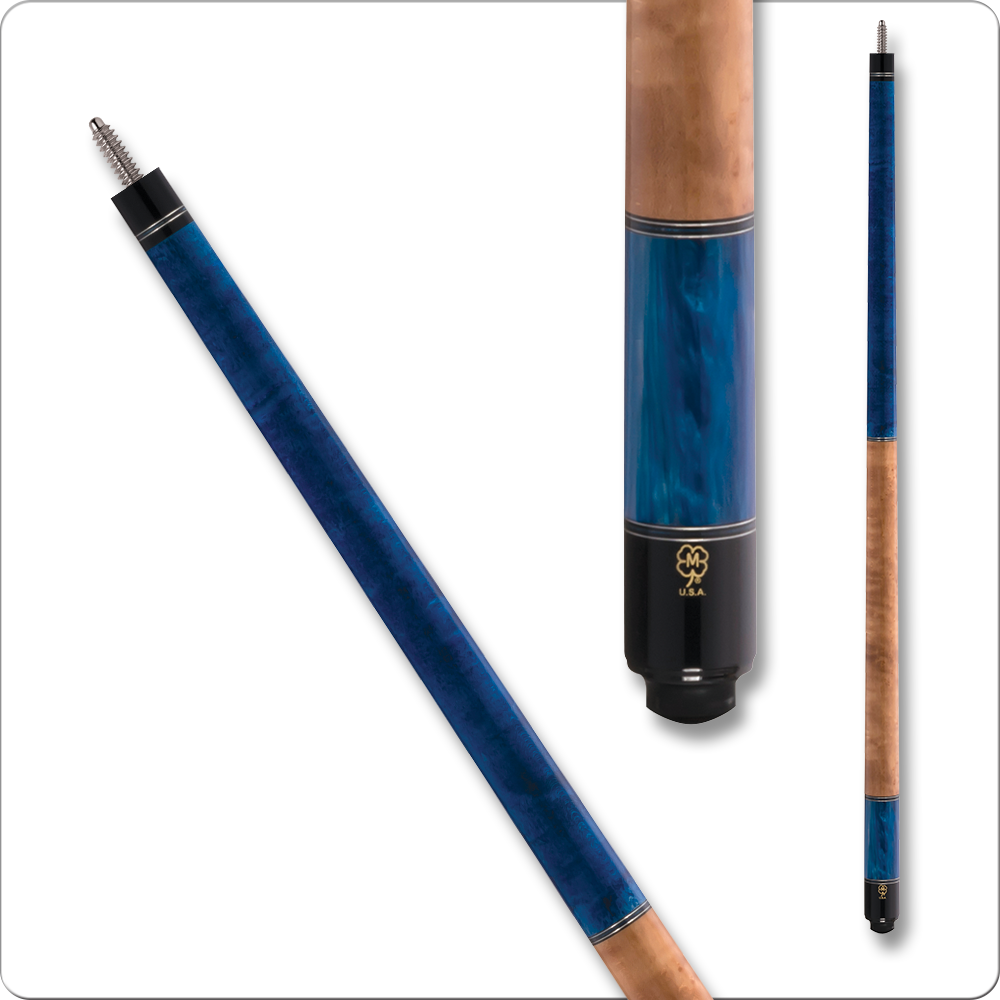
At $900 the SL5 Select Series cue answers the question of what nearly double the money buys. The answer is wood and work. The Select line reaches into more figured, more carefully matched timber, with construction details and finish work that take more shop hours per cue. In the hand, the difference shows up as balance and refinement rather than raw playability, because a $500 McDermott already plays excellently. You are paying for the version of that hit wrapped in wood you will stare at between innings.
This is the sweet spot for the player who has settled into the game for good. It is a cue you stop shopping after.
What Stays the Same at Every Price
It bears repeating because it is the whole reason the ladder works: the hit is the constant. McDermott builds every tier around the same core construction philosophy, so moving up the range never feels like switching brands. Players who start with a $468 sneaky pete and later treat themselves to a Select cue routinely report that the new cue feels like home from the first rack, just more refined. That continuity is worth real money on its own, because it means your muscle memory transfers intact with every upgrade instead of resetting.
The Collector Tier: 50th Anniversary Cues
At the top of our current McDermott wall sit the 50th Anniversary Series cues, built to mark five decades of the company. The MCD50E runs $1,495 and the MCD50H tops the range at $2,450. Limited runs, commemorative detailing, and the most ambitious inlay and wood work in the modern catalog put these in a different category from the tiers below. They are playing cues, not wall hangers, but their value story includes scarcity: anniversary runs end, and cues from milestone series historically hold interest with collectors long after they leave production.
Buy here if the cue is as much an object as an instrument for you, or if you want a milestone piece that marks a milestone of your own. Nobody needs a $2,450 cue to run a rack. That was never the point of cues like this.
Featured McDermott Products
-
Sale!
-
McDermott TITANIUM Sneaky Pete Pool Cue
Original price was: $520.00.$468.00Current price is: $468.00. Select options -
Sale!
-
McDermott PACIFIC BLUE Sneaky Pete Pool Cue, Blue
Original price was: $520.00.$468.00Current price is: $468.00. Select options -
Sale!
-
McDermott SL5 Select Cue
Original price was: $1,000.00.$900.00Current price is: $900.00. Select options This product has multiple variants. The options may be chosen on the product page
Do Not Forget the Other End of the Rack
McDermott’s specialty cues deserve a mention because they solve problems the playing cue should not. The Stinger NG08 jump break cue at $436.50 covers both the breaking and jumping jobs in one stick, which is the practical choice for players who do not want to carry three cues to league night. Breaking with your $900 playing cue grinds its tip flat and risks the shaft on the hardest hit in the game. A dedicated breaker is cheap insurance, and the Stinger line has been a quiet favorite for years.
A Word on Shafts and Upgrades
The other quiet advantage of buying into this brand is the upgrade path that does not require replacing the cue. McDermott’s shaft program lets you pair most butts with progressively higher-performing shafts over time, from the standard maple options up through the layered G-Core and into carbon fiber territory with the Defy line. Plenty of our customers run a sneaky pete butt with an upgraded shaft and enjoy flagship-level playability for hundreds less than a flagship. Buy the tier your budget likes today, knowing the front half of the cue can grow with your game later.
How to Actually Choose
Match the tier to your relationship with the game, not to your ego in either direction. Playing twice a month with friends? The $468 sneaky pete is more cue than the games demand, in the best way. League every week? The sneaky or the G Series will not be outgrown, and the warranty means the decision lasts decades. Playing tournaments and practicing with intent? The Select tier rewards the hours you are putting in. And if you already know which anniversary cue you want, you were never reading this section anyway.
Whatever tier you land on, protect it. A cue that costs more than dinner deserves better than a soft sleeve in a hatchback, and our pool cue case collection starts cheap enough that there is no excuse. If you are still weighing McDermott against other brands entirely, the full pool cue lineup lets you compare across every maker we carry side by side.
The short version of two thousand words: $468 buys the McDermott hit in plain clothes, $500 buys it dressed up, $900 buys it in wood worth staring at, and the anniversary cues buy a piece of the company’s history. There is no wrong rung on that ladder, only the rung that matches where your game lives right now.

About Corey Bernstein
Corey Bernstein is a competitive pool player, billiards equipment specialist, and co-owner of Quarter King Billiards in Wilmington, North Carolina. With over a decade of experience in the sport, Corey has competed in regional APA and BCA sanctioned tournaments and maintains an intimate knowledge of cue construction, shaft technology, and table mechanics. As a certified dealer for brands including Predator, McDermott, Jacoby, Viking, Lucasi, Meucci, Joss, and Cuetec, Corey personally tests and evaluates every cue that comes through the shop. His hands-on approach to the business means he has racked thousands of hours behind the table — breaking in shafts, comparing tip compounds, and dialing in the nuances that separate a good cue from a great one. When he is not behind the counter or on the table, Corey is researching the latest advances in low-deflection technology, carbon fiber shaft construction, and cue ball physics. His articles on Quarter King Billiards combine real-world playing experience with deep product knowledge to help players at every level find the right equipment for their game.