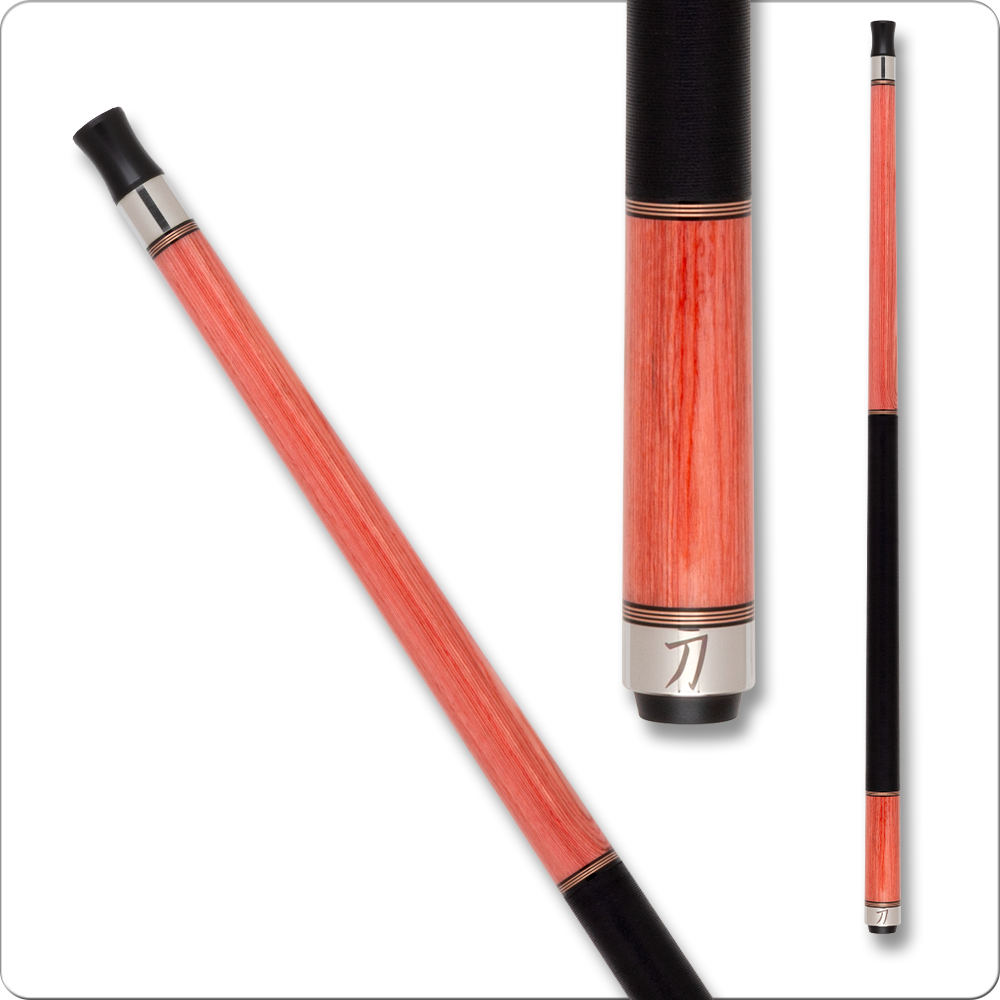
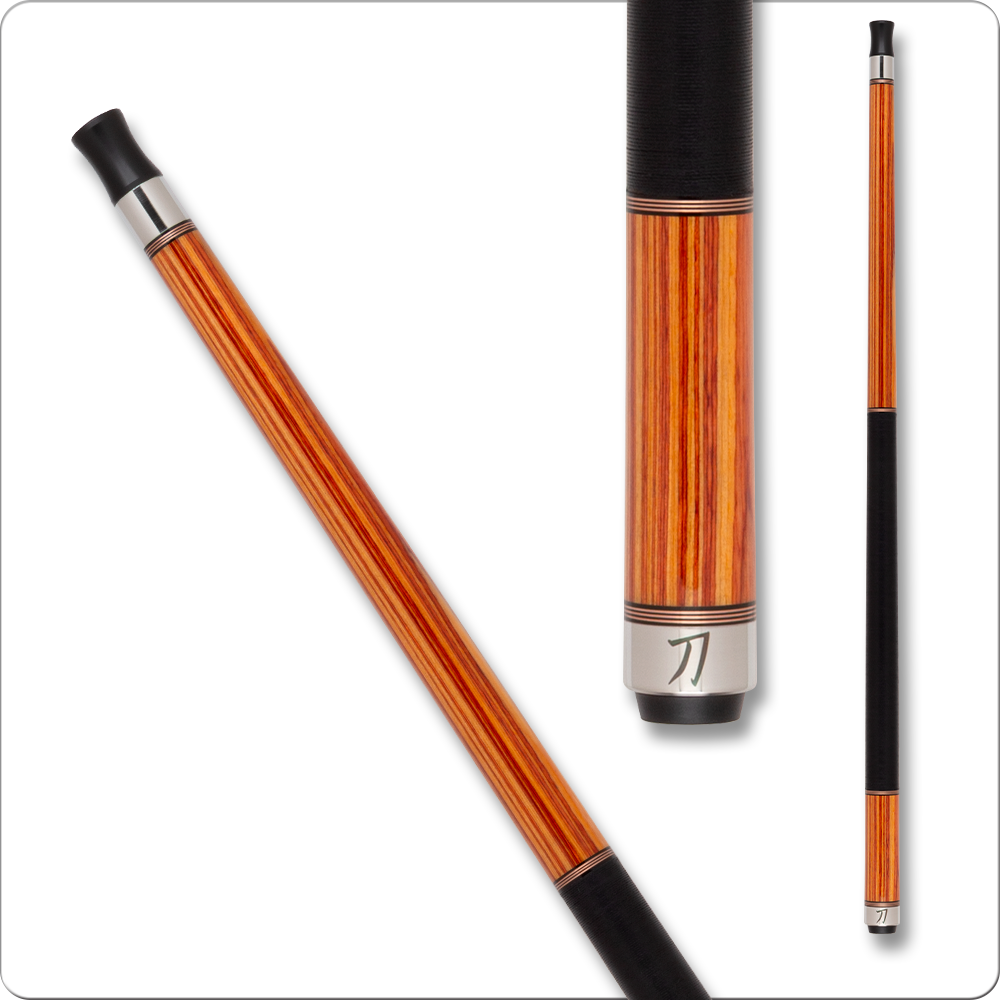
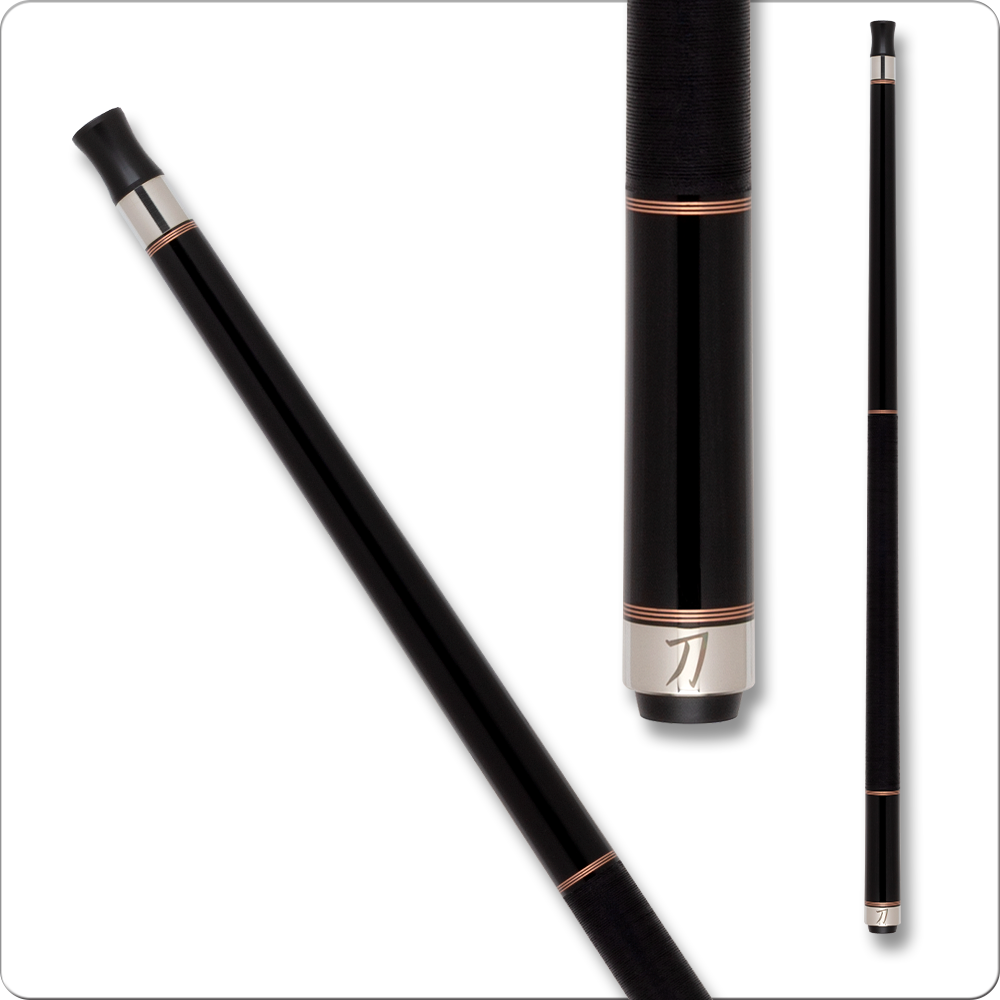
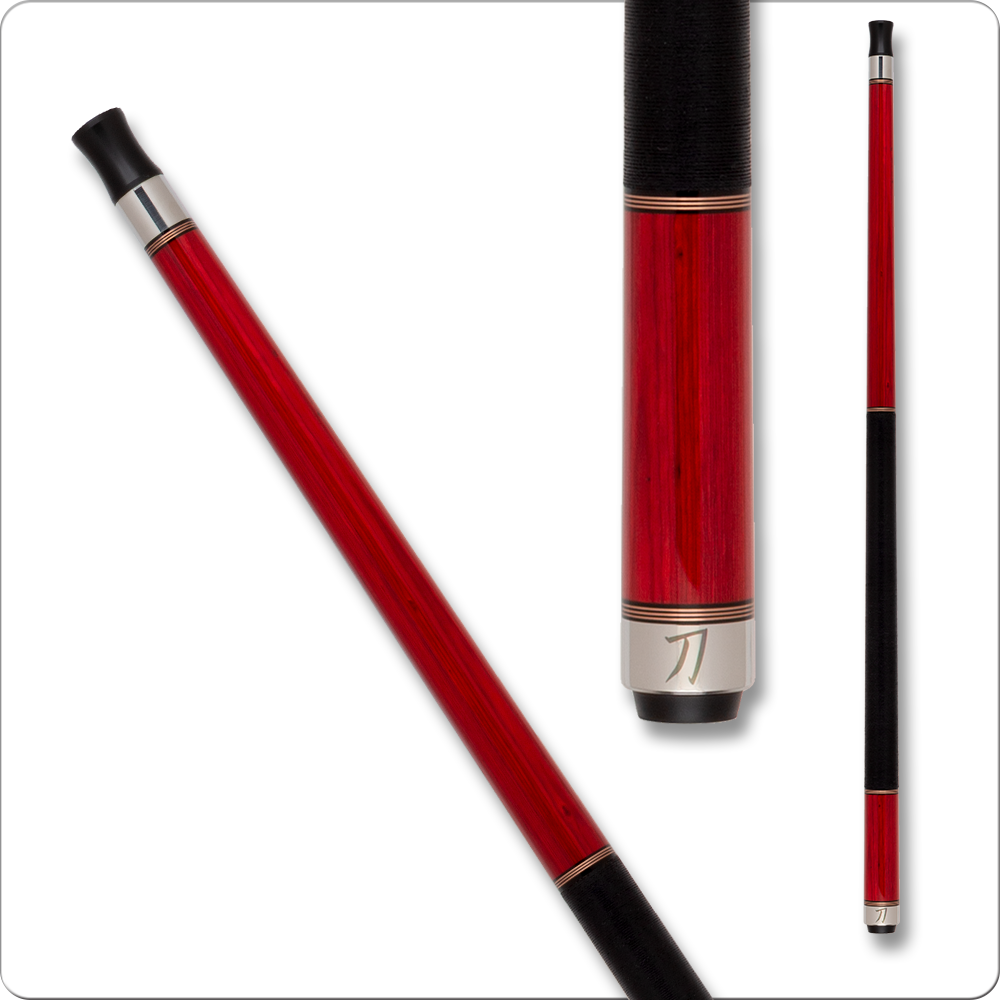
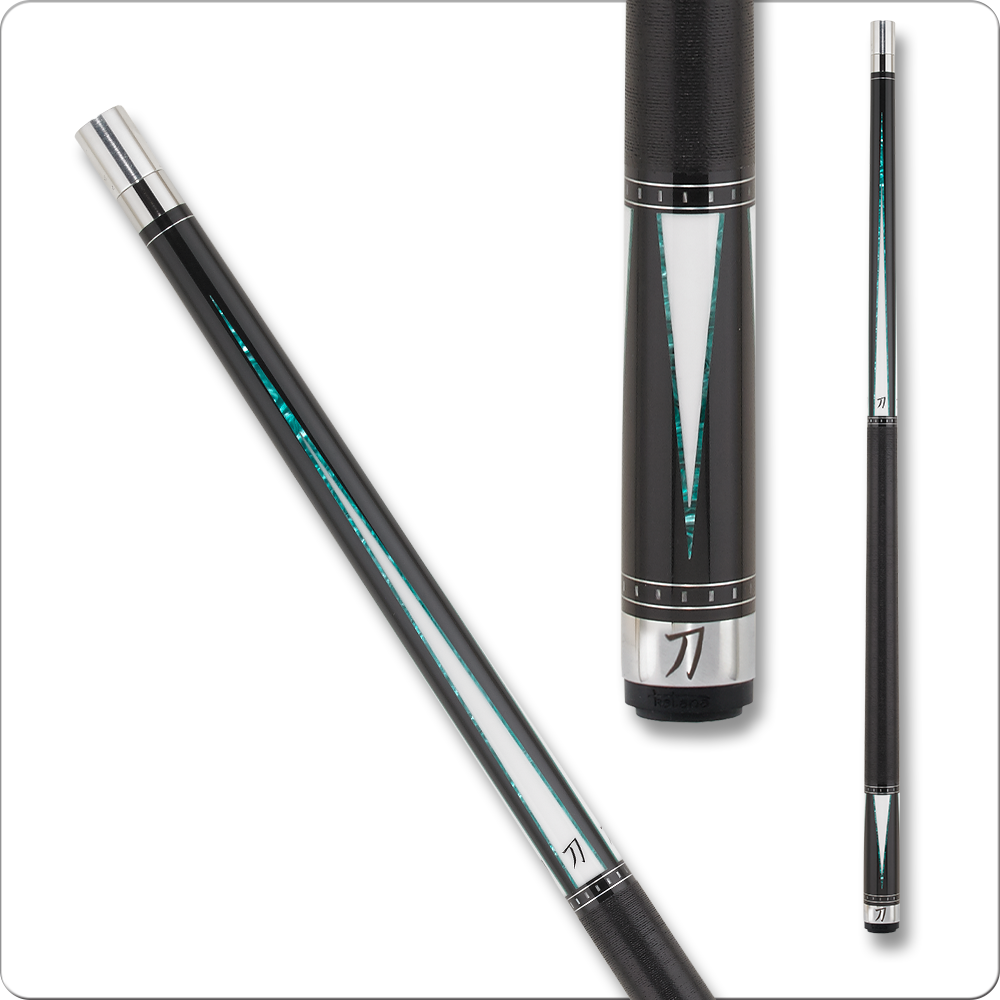
Katana is a house-branded cue and shaft line built around one idea: a low-deflection shaft that aims to play like pricier options without the pricier price tag. We carry 37 Katana products across cues, shafts, cases and accessories, from the color-driven Dragon cue line to standalone performance shafts. Most cues run a Uni-Loc joint, with two models on a separate Katana Quick Release pin, and the majority ship with joint protectors in the box. Below the grid we break down the shaft construction, the joint and wrap choices, and what players say after they've put racks on one.
Every item is brand new and 100% genuine, backed by its full manufacturer warranty. Free shipping on orders over $98 (contiguous US) and 30-day returns. Every spec on this page is checked against the manufacturer's published data by our Wilmington, NC store team.
4.9/5 average from 131 customer reviews across Katana.
Katana is a house-branded line of pool cues, shafts and cases rather than an independent cuemaker with its own factory story. We haven't been able to verify a founder, a founding year, or a factory location for the brand from any source we trust, so we're not printing one. Independent AZBilliards buyers back up that read even without a manufacturer page to point to: more than one describes Katana as a name owned by the company behind it rather than an independent cue company, with the cues built by a separate contract factory in China, the same arrangement several other house brands in our catalog use. What we can verify, product by product, is what's actually on the shelf: 37 Katana products in our catalog today, 24 of them in stock, spanning pool cues, shafts, cases and accessories, priced from about $10 up to about $720 with a median around $430.
The brand's calling card is its shaft. Independent forum discussion on AZBilliards, describing the earlier Katana II shaft, and product copy from a major online retailer both describe the same build: ten pieces of radially laminated maple, a shortened 3/8-inch ferrule, and a Katana-branded tip made by Tiger. That retailer copy frames the shaft plainly as a budget-friendly alternative to the premium low-deflection shafts sold by bigger cue brands, built to a similar idea at a lower price. Our own catalog data backs that up in the numbers: 20 of the 36 rows in the Katana spec sheet we track carry that exact 3/8-inch fiber linen ferrule paired with a 29-inch, 10-piece low-deflection shaft on a pro taper.
A radially laminated shaft is built from wedges of maple glued together around a center line instead of turned from one solid blank. The point for the player is less deflection, meaning less sideways squirt of the cue ball when you hit it off-center, because the shaft stays lighter and more consistent through the hit end. Katana pairs that construction with a 3/8-inch ferrule, shorter than the more common half-inch ferrule, which keeps more of that low-deflection wood closer to the tip. Independent AZBilliards discussion of the Katana II shaft confirms the same ten-piece radial build and shortened ferrule spec that's still on the shelf today.
The standard Katana shaft wears a house tip made by Tiger, sized 12.5mm on 13 of our 36 catalog rows and 11.5mm on another 7, with a layered black tip in 12.5mm or 12.7mm sizes on the rest. Forum owners of the earlier Katana II describe the exact same setup, a Tiger-made Katana tip on a shortened ferrule, a sign the spec has held steady across the line.
Twenty-five of the 27 cue-type Katana products in our catalog use a Uni-Loc joint. Two SKUs are listed in our product data with a separate "Katana Quick Release" joint instead. We haven't found manufacturer documentation explaining how that pin differs from Uni-Loc, so we're not going to guess here; check the individual product page if joint compatibility with a shaft you already own matters to you.
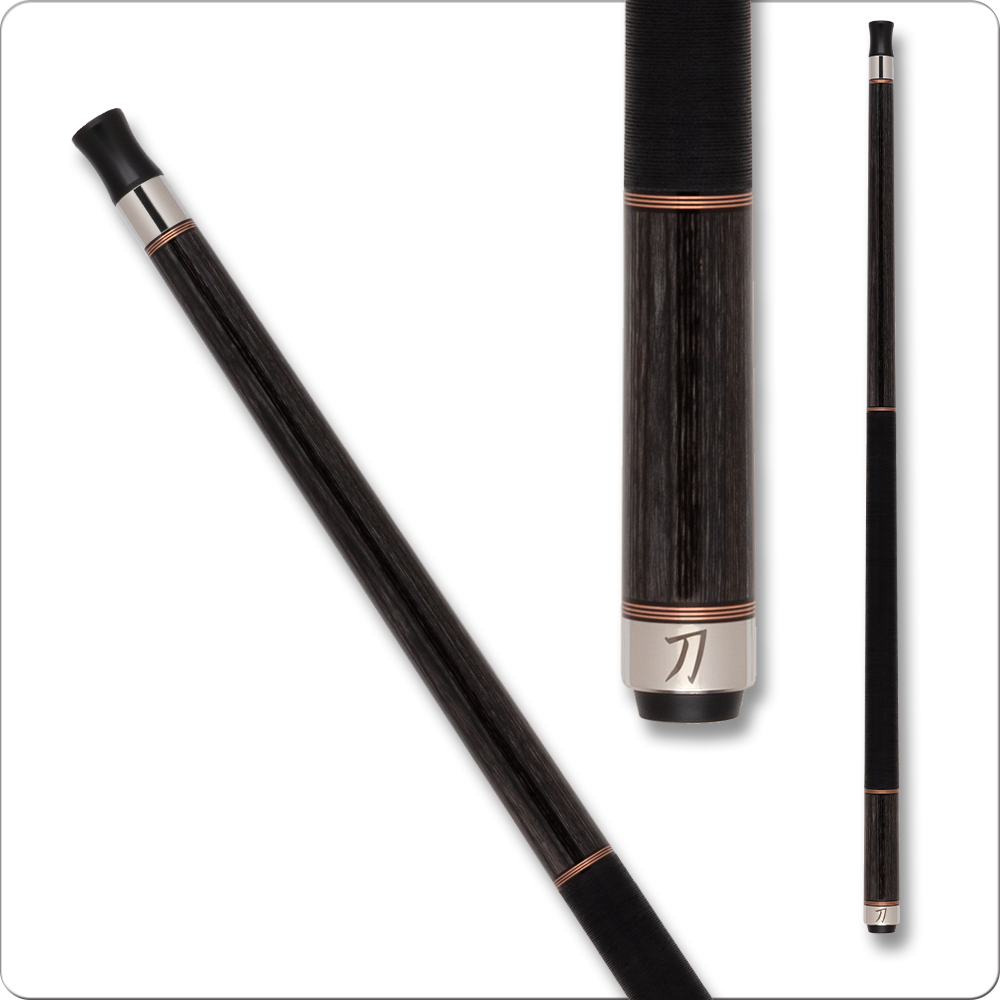
Our Katana Pool Cues category holds 15 core cue models, which come out to 25 total published listings once you count every color and price variant separately. That includes standard KAT-series playing cues like the KAT01 and KAT16 (about $580 and $670 respectively) and the Katana Dragon Cues sub-line, sold as two separate cues per color, one built on a wood-and-carbon-core shaft and one on a full carbon-fiber shaft, covered in more depth on its own page. Color runs wide across the cue lineup: black is the most common finish (6 listings), followed by blue, white and tan (3 each), with red, pink, orange, charcoal, sunburst, brown and grey rounding out the palette.
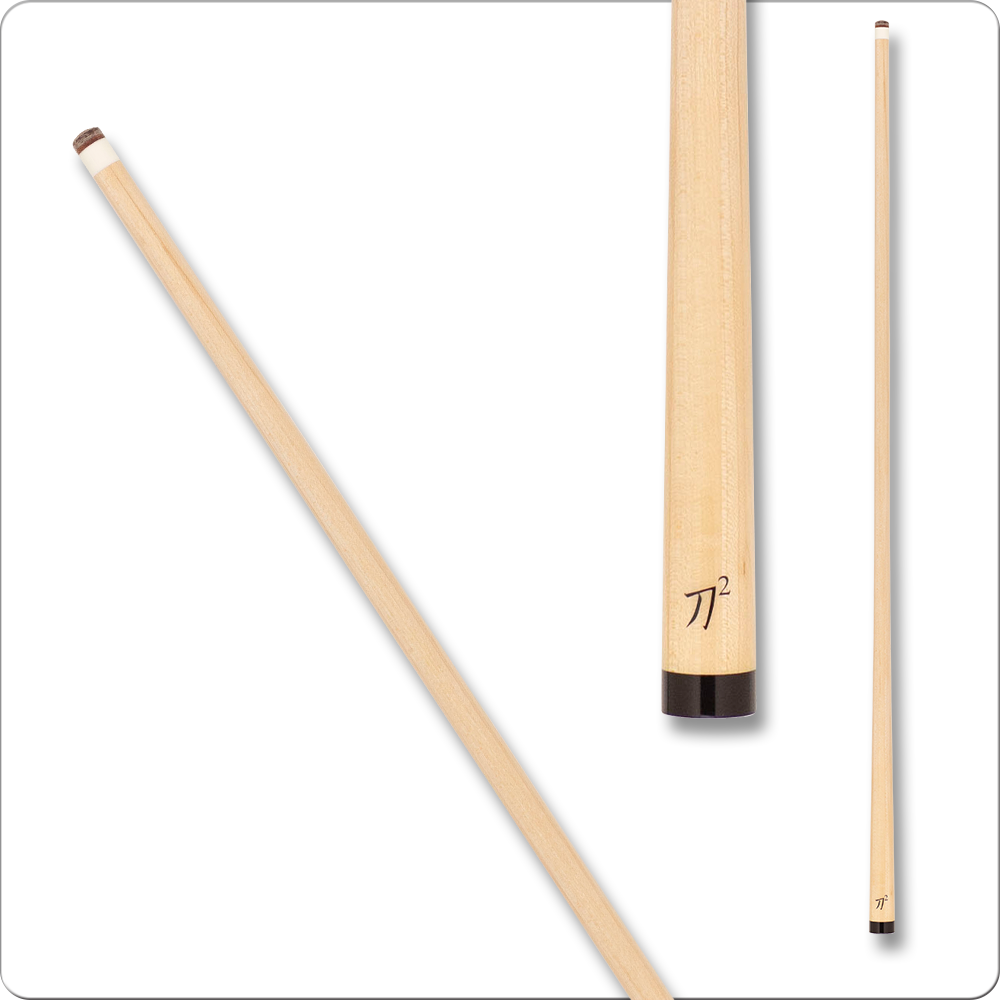
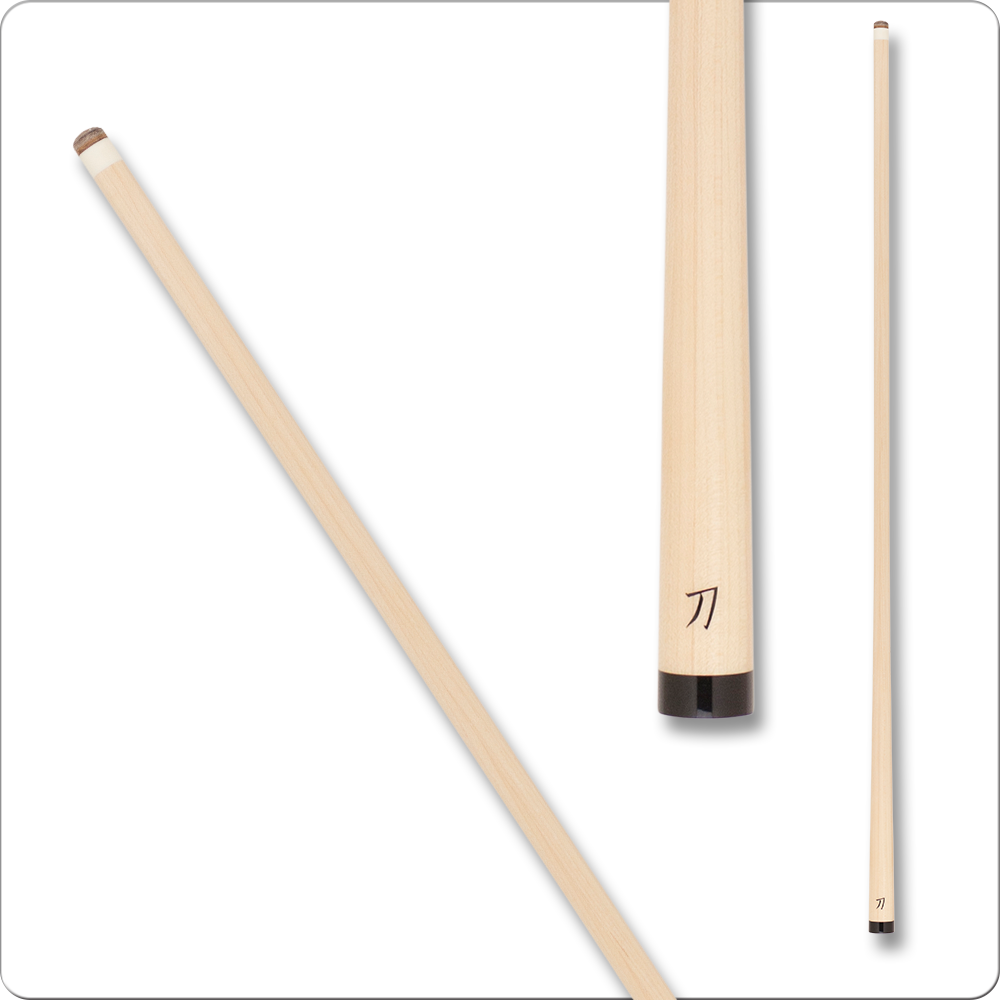
Katana also sells standalone shafts you can drop into a compatible existing cue. Our catalog names two of them specifically, the KATXS1 Performance Shaft (13 catalog rows) and the KATXS2 Performance Shaft (7 catalog rows), among 8 Katana listings in our shafts category.
The case side of the brand runs 5 listings in our dedicated Katana Cases category, part of 10 total case listings that carry the Katana name, from the 1x1 hard case up to the 4x8 butterfly backpack case.
Two Katana accessory listings round out the catalog. We don't have manufacturer-sourced detail on what's in them beyond that count, so we'll leave it there rather than guess.
The 1x1 is Katana's smallest case, a vinyl hard shell that holds one butt and one shaft in a single oval-profile sleeve, closed with a zipper and no external pocket. AZBilliards owners who've carried one for years describe it as simple and well made, a slimmer alternative to the bulkier multi-cue styles, in the spirit of older minimalist designs like the It's George and Centennial 1x2 cases, though more than one wishes it shipped with a small accessory pouch. It runs about $120 and is out of stock at the moment; see the Katana 1x1 hard case for restock status.
Step up to the 2x2 and you get room for two butts and two shafts in the same vinyl hard-shell build, now with a shoulder strap. Owners on AZBilliards call the fit nice but a bit tight, and at least one added a small clip-on pouch of their own since the case doesn't include one. It's priced about $180 and currently in stock on the Katana 2x2 hard case page.
The 2x4 holds two butts and four shafts up to 32 inches, with black felt lining each sleeve and a padded, snap-button lid, a layout an AZBilliards seller's listing for this exact model confirms down to the two magnetically sealed front pockets and the zippered side pocket sized for an extension or jump cue. It comes in charcoal or chestnut, both about $330 and in stock, on the charcoal or chestnut product pages.
The KATC04 is Katana's soft-sided option, a 4x8 vinyl backpack case in grey or white built for a player hauling more than a couple of sticks, a primary cue plus a break or jump backup, say. It's about $340 and in stock on the Katana Butterfly Backpack case page.
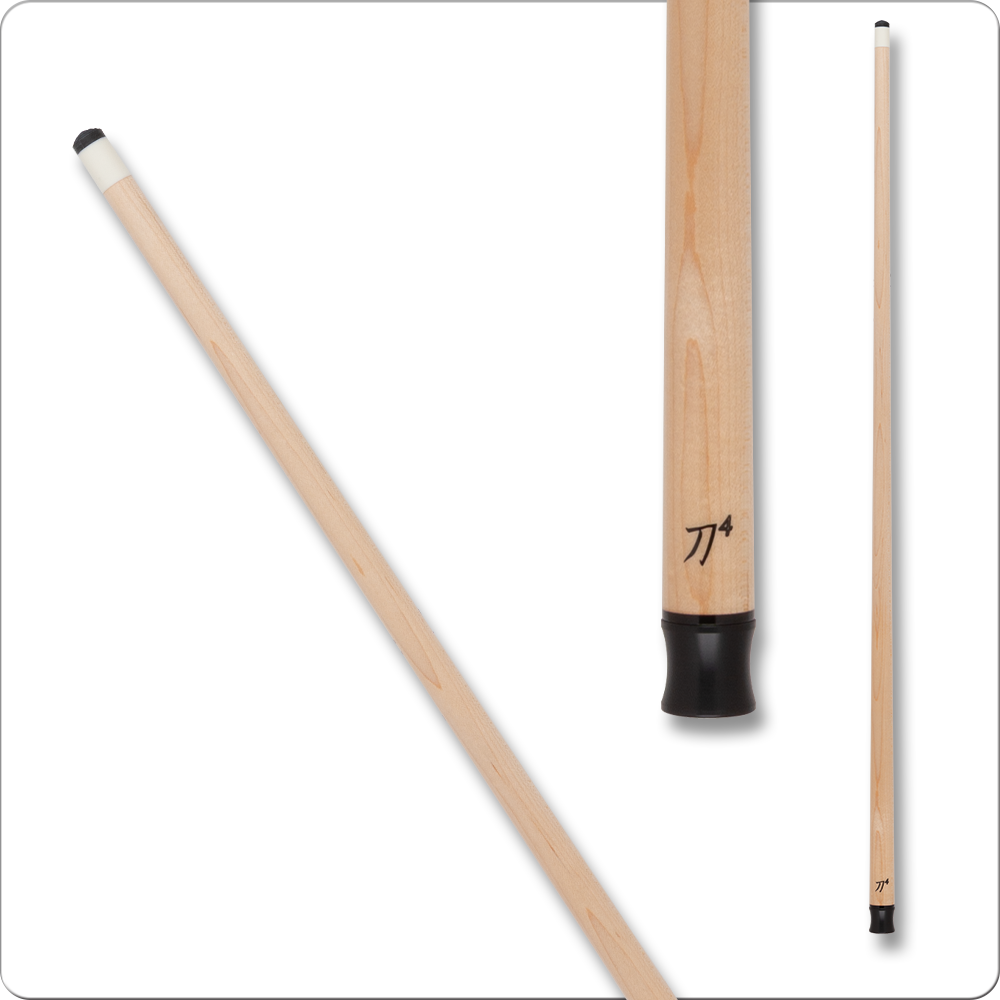
KATXS1 and KATXS2 are standalone replacement shafts built to the brand's radially laminated low-deflection design rather than sold as part of a cue. KATXS1 wears the 12.5mm Katana tip by Tiger and ships in 15 separate pin-fitting variations, from 3/8x10 threading to several Uni-Loc-style patterns, so it can go into more cues than just Katana's own; KATXS2 wears the smaller 11.5mm version of the same tip across 10 pin-fitting variations. Both are about $270 and in stock, on the KATXS1 and KATXS2 shaft pages.
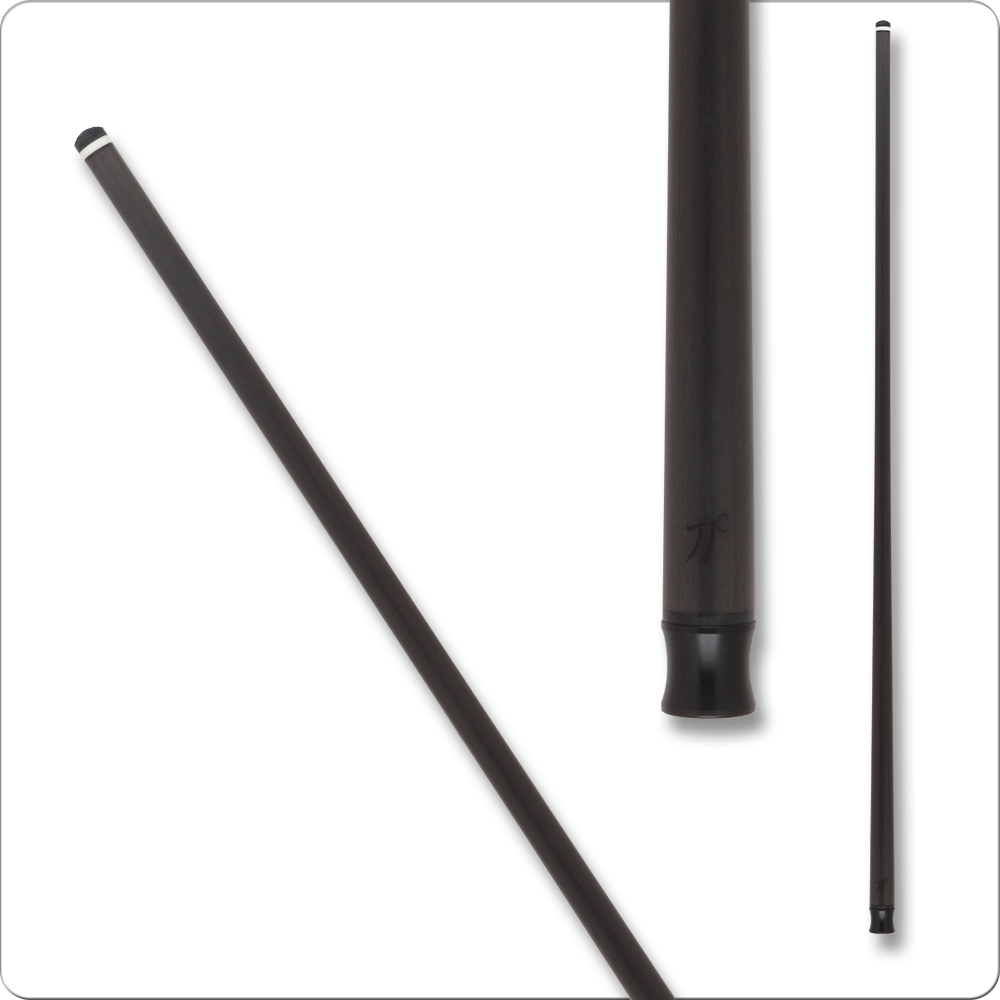
These two mirror the two shaft builds sold on the Dragon cue line, but on their own, for a Uni-Loc-pinned cue you already own. The KATXS4 carries a carbon core inside a maple blank, about $130 and in stock; the KATXSC is a full carbon fiber shaft, about $200 and out of stock at the moment. Both wear a white ferrule and a black collar rather than the fiber-linen ferrule used on the standard Katana shaft. See the carbon core and carbon fiber shaft pages.
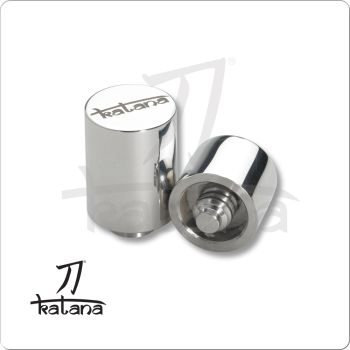
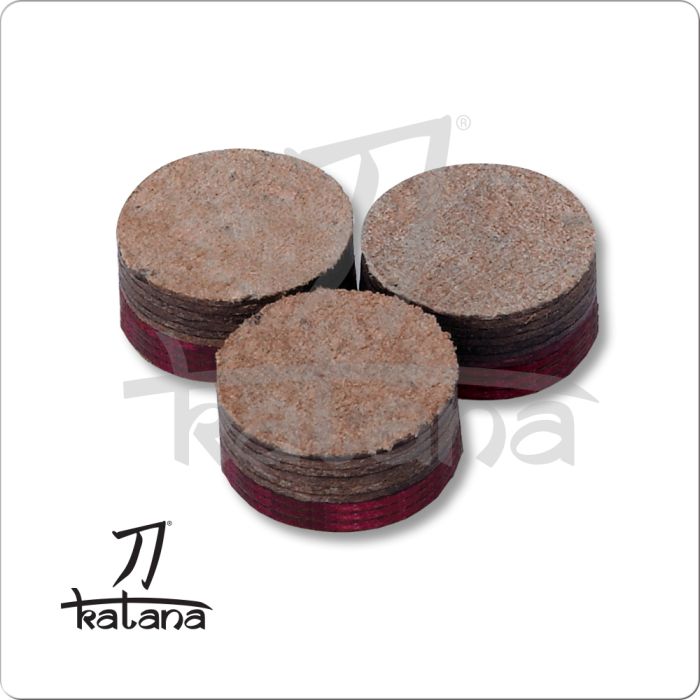
Rounding out the lineup: the KATBJXS is a standalone break/jump shaft in hard rock maple with a conical break taper, about $110 and out of stock at the moment. The JPKAT joint protector set is stainless steel, sized for the Uni-Loc joint, about $20 and out of stock. The QTKAT is a single replacement tip, an 8-layer pig skin tip in 14mm, about $30 and in stock; it's the one item in the Katana line we found made in Japan rather than China, per our own product data.
Across the 27 Katana cues we categorize by cue type, 25 run a Uni-Loc joint and 2 run the Katana Quick Release pin noted above. Shaft size splits 17 cues at 12.50mm, 8 at 12.70mm and 2 at 13.00mm, in classic wood (17), carbon fiber (9) or fiberglass (1) construction. Almost all of them, 25 of 27, are wrapped in linen rather than sold wrapless. Most of the lineup, 27 of the products we categorize by cue type, are standard playing cues; 3 are dedicated jump cues and 3 are break cues, so a specialty cue in the same family as your Katana playing cue is available if you need one. Stock moves too: 24 of the 37 total Katana products are in stock as of this writing, so if a specific color or shaft build you want shows as out of stock, that's a real-time inventory position rather than a discontinued line. If you're shopping by shaft spec rather than by cue model, our shafts category and the Uni-Loc joint page are the fastest way to see everything that matches.
Katana is built and priced for players who want low-deflection performance without paying premium-shaft money for it, not necessarily players chasing a proprietary tournament joint system. Our catalog's price spread, about $10 for small parts up to about $720 for our highest-priced Katana cue, with most of the cue lineup sitting in the $420 to $670 band, tracks with that positioning: it reads as an upgrade path off a stock house cue rather than a step up from an already-premium setup.
Our own catalog data lists a "Limited" warranty on 34 of the 36 rows in the Katana spec sheet we track. Product copy from a major online retailer for the Dragon line describes the same coverage as a 1-year manufacturer's warranty. Neither source spells out exclusions, so don't assume wrap, tip or finish damage is automatically covered; ask before you buy if that matters to you. On what is documented: every cue in the Katana cue spec sheet we track lists China as the country of origin, and 34 of 36 rows come with joint protectors in the box. The one exception we found across the wider product line is the QTKAT replacement tip, made in Japan rather than China, per our own product data. AZBilliards forum members raise the warranty length and the Uni-Loc joint choice, rather than a proprietary alternative, as the two things that give them pause before ordering.
Players on the AZBilliards forums are genuinely split on the Katana low-deflection shaft. Some call it a lot of shaft for the money and put it in the same conversation as OB and Predator shafts on value. Others disagree; one experienced player who has cycled through a long list of low-deflection shafts ranked the Katana among the worst they'd tried. A piece of advice that comes up more than once in those threads, regardless of which side someone lands on, is to swap the factory tip before judging the shaft on performance, a fix that keeps recurring from 2013 owner reviews through the most recent posts we found. Buyers who have also owned a Predator 314 or Z-series shaft tend to place the Katana shaft in between that and a standard maple shaft, calling it "predator-lite": more deflection than Predator, less than an unmodified maple shaft, with a firmer hit because it isn't hollow at the tip end the way a Predator shaft is.
Case buyers report similar consistency. AZBilliards owners of the compact 1x1 and 2x2 hard cases call them snug and well built, in the spirit of older minimalist case designs, though the recurring wish on both threads is for a small external pouch that neither case includes.
Browse the full Katana range above, or start from the category level: our wider pool cues, shafts and pool cue cases categories cover everything we carry beyond the Katana name.
Katana is a house-branded line rather than an independent cuemaker with its own factory story, so there is no founder or founding date we could verify from any source we trust.
Most Katana cues use a Uni-Loc joint, 25 of the 27 cue-type products in our current catalog. Two models use a separate Katana Quick Release pin that we don't have manufacturer documentation on.
It's built from 10 pieces of radially laminated maple with a shortened 3/8-inch ferrule and a Katana-branded tip made by Tiger, per independent AZBilliards shaft descriptions and retailer spec copy.
Our own catalog data lists it as a limited warranty; a major retailer's spec table calls the same coverage a 1-year manufacturer's warranty. Exact exclusions aren't published by either source.
Every Katana cue in our catalog data lists China as the country of origin. The one exception in the wider product line is the QTKAT replacement tip, made in Japan.
Learn about our up and coming Quarter King Billiards engineered products, get coupons to save $$$, stay up to date with our sales, and of course stay in the loop with our constantly changing used cues!