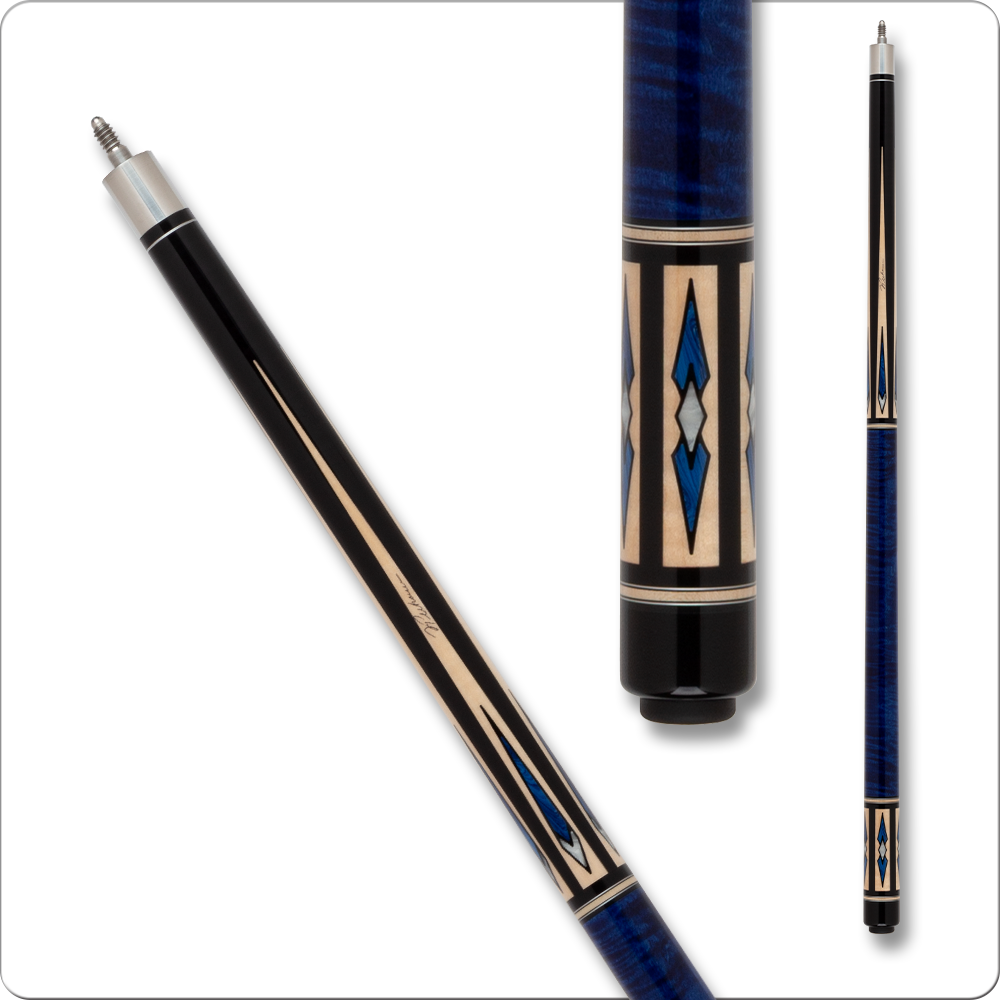
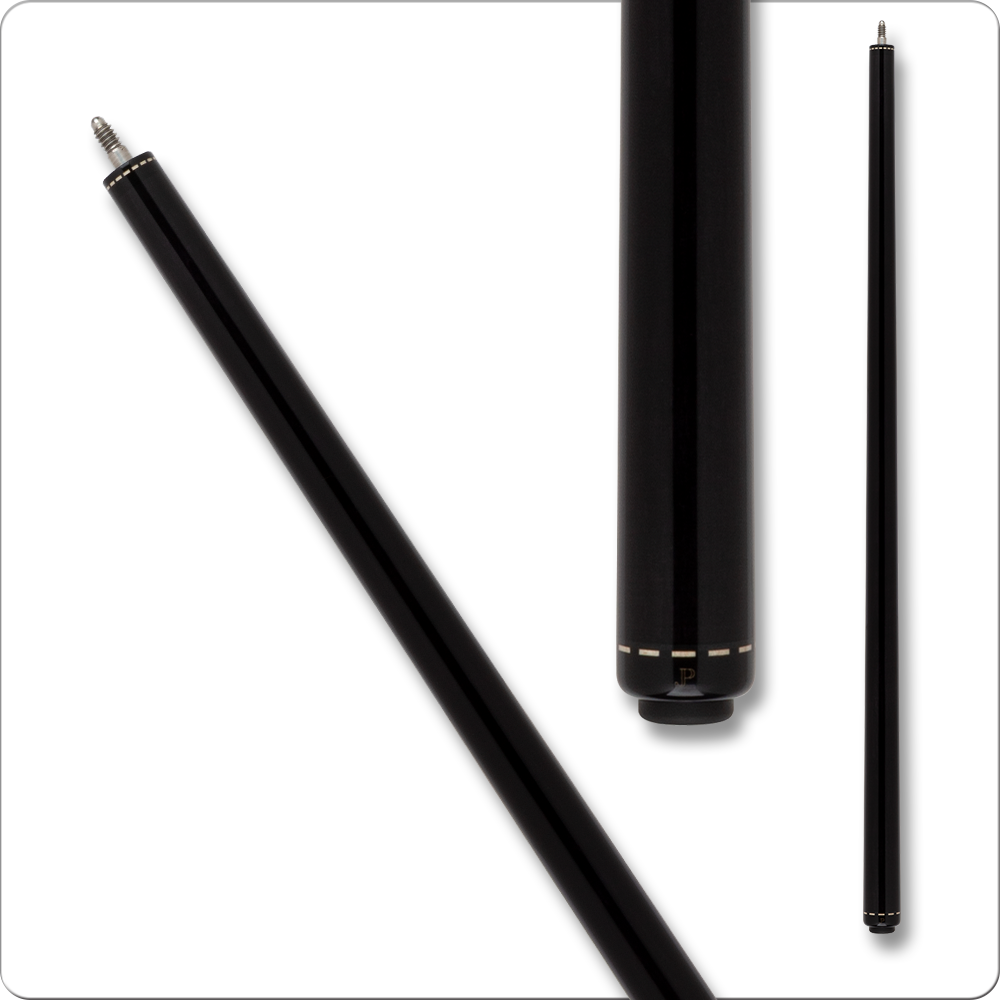
Pechauer has built pool cues in Green Bay, Wisconsin since the early 1960s, when founder Jerry Pechauer turned a wagered pool match into a broken Willie Hoppe cue and, two years later, his first finished cue. The company is still family-run today, now led by Jerry's son Joe, and every cue still comes out of the same Wisconsin workshop. Quarter King stocks 58 Pechauer products across cues, shafts and a short run of accessories, priced from about $10 to about $1,170. Below is a look at how Pechauer builds a cue, the joint and shaft options that show up across our lineup, what the warranty actually covers, and where to find the models themselves.
Every item is brand new and 100% genuine, backed by its full manufacturer warranty. Free shipping on orders over $98 (contiguous US) and 30-day returns. Every spec on this page is checked against the manufacturer's published data by our Wilmington, NC store team.
5.0/5 average from 187 customer reviews across Pechauer.
The Pechauer story starts in 1961, when a young Jerry Pechauer won a wagered pool match and collected an unusual prize: a broken Willie Hoppe cue. Rather than throw it out, he set about fixing it, and the repair work turned into a habit. By 1963 he had built his first complete cue from scratch, and J. Pechauer Custom Cues was underway, working out of Green Bay, Wisconsin, where the company keeps its workshop today at 4140 Velp Ave.
Ownership has stayed inside the family since. Jerry's son, Joe Pechauer, took over as President in 2007, with Jerry continuing to offer support and expertise on a regular basis, and Joe's own sons are now part of the business as well. Pechauer describes itself as a three-generation family operation, and the official site discloses no parent company or outside ownership behind it.
The company has picked up industry recognition along the way: Cue of the Year in 2013, then again in 2015 and 2017, and both Jerry and Joseph Pechauer have since been inducted into the International Cuemakers Hall of Fame. In 2008, Pechauer also partnered with NFL quarterback Brett Favre on a charity drive that raised fifty thousand dollars. None of that changes what shows up on this page, but it is the kind of shop these cues come out of, a small, hands-on operation that has been at this since 1963.
Most Pechauer cues ship on the company's own Speed Joint, a proprietary pin Pechauer designed and builds by default rather than licensing from an outside supplier. It is not the only option: Pechauer will build to a Radial, Uniloc, 3/8x10, 5/16x14 or other joint pin if you ask for it, which is why a handful of the Pechauer cues and shafts we carry show up on something other than the Speed Joint.
For players who want a low-deflection carbon shaft, Pechauer's current option is the Rogue 2. It carries an enhanced outer carbon layer for a smoother finish, and Pechauer builds it roughly 20% stiffer than the original Rogue, which the company says translates into a firmer hit and more consistent feedback.
Pechauer also builds a low-deflection shaft the traditional way, out of wood. The Performance Plus is laminated from 12 pieces of hard rock maple, cut and kiln-dried in Pechauer's own shop, engineered to cut deflection while keeping a maple hit rather than switching a player over to carbon.
Across the Pechauer spec sheet we work from, the standard tip is a 12.75mm Pechauer Jade Medium, with Gold Medium and break-specific tips used on the smaller-diameter and break models. Ferrules are almost always Juma, a dense phenolic-type material, in 5/8-inch or 1-inch sizes depending on the cue, with a small number of models running a thin white ferrule instead. Collars vary by series, from a dashed maple ring to a black or stainless steel collar, and forearms and butt sleeves are maple, sometimes stained in color and sometimes left natural, dressed up on the higher-end models with ebony-framed pearl or ivory inlay work. A step up from the standard single-layer tip, a handful of higher-end models use a 10-layered Jade or Tiger Emerald tip instead, and the Rogue carbon shafts run a random-pattern C4+ synthetic tip rather than a leather one. Ferrules are Juma on almost every model, though a small number use a brass ferrule instead, and collars occasionally show up in colored Juma, blue, green or white, or in malachite on select high-end builds. Inlay work on the higher-end models runs to curly maple forearms with rosewood-stained points framed in ebony and butt sleeves finished in rosewood stain with a small Pechauer diamond inlay at the bottom, with colored pearl point work in shades like teal, blue or pink on the most detailed builds.
The core of what we stock is Pechauer pool cues, 50 of them, split between the JP Series and Pro Series lines detailed on their own pages.
Beyond complete cues, we carry a small run of standalone Pechauer shafts and accessories, 8 products between the two, including carbon fiber shafts like the Rogue and dedicated break shafts, browseable from our shafts category alongside shafts from other brands.
Across the 58 Pechauer products we stock, the Speed Joint and its piloted version account for the large majority, 35 and 16 respectively, with 3 built on a Uni-Loc pin and 2 on a Radial pin instead. Shaft size runs heavily to one number: 45 of our Pechauer products carry a 12.75mm shaft, 7 carry a 13.00mm shaft, and a couple of outliers sit at 11.80mm and 12.40mm. On shaft type, 49 are built on classic wood maple and 1 on carbon fiber. Wraps split between 38 finished in linen wrap and 12 left wrapless, which on a Pechauer usually means a maple forearm brought down to a bare, sometimes stained, grip section instead of a wound wrap. If you are shopping by shaft spec across brands rather than by cue, our full shafts category lets you filter across everything we carry, not only Pechauer. A wrapless Pechauer isn't left plain, either: the grip section on these models is typically finished in a stain such as purple or blue, or left a natural, non-stained maple, the same finish choices offered on the wrapped cues. Break and jump shafts are cut differently from the playing shafts, too: Pechauer's carbon break shaft uses a modified straight taper instead of the 10 to 12-inch pro taper used on its playing shafts, built for a harder, more direct hit off the break.
Among the 58 Pechauer products we carry, tan is the most common finish at 30, followed by black at 19, brown at 16, blue at 10, grey at 9, green at 4, red at 3, purple at 2 and pink at 1. A single cue or shaft can carry more than one of these colors across its forearm, wrap and collar, so the counts reflect color tagging rather than 58 mutually exclusive options, but they show how far Pechauer's customization runs past a plain natural-maple look.
Team Pechauer's current spotlight is April "The Grinder" Larson of Minnesota, a five-time Junior National Champion, the 2025 USA Women's National 10-ball Champion, and currently ranked #14 on the WPBA tour. Alongside her, Pechauer features Wisconsin player Kaden Hillman on its homepage team roster. The company has also built a signature cue line, the Pink Dagger, named for and inspired by Team Pechauer player Sofia Mast of Florida.
Historically, the roster has included multi-time World Champion Oliver Ortmann, whose relationship with the company led to a dedicated Ortmann Series sold in Europe, and 17-time World Trick Shot Champion Paul Gerni, who also played Pechauer cues.
A Pechauer cue bought new after January 1, 2006 comes with a non-transferable lifetime warranty to the original purchaser covering defects in material and workmanship. It excludes broken cues, broken or cracked butt caps, and normal wear items like the tip, finish and wrap, and it is void if the cue has been abused, mishandled, altered, or damaged by extreme heat or humidity. Warpage gets a narrower window: Pechauer covers it for one year from purchase for the original owner with a receipt, and after that year the company will still look at and repair a warped cue, but will not warranty warpage caused by environmental factors.
The Rogue carbon shaft carries its own lifetime warranty against manufacturer defects and is guaranteed straight on arrival, but a broken Rogue shaft is explicitly excluded. If you send one back to Pechauer directly rather than through wherever you bought it, expect a modest return shipping charge, roughly thirty dollars.
Two practical notes from the spec sheet worth knowing before you order: most of the Pechauer cues we've catalogued, 57 of 81 models, use a changeable weight bolt system if you like to fine-tune balance, and none of them ship standard with a case or a joint protector, so budget for those as a separate purchase. Every Pechauer cue is also handcrafted in Green Bay, Wisconsin from wood hand-picked in the north woods of Michigan.
On the AZBilliards forums, the most consistent point of discussion around Pechauer is the proprietary Speed Joint itself: some players note it makes it harder to swap in a shaft from another cue brand than a more universal pin would. Other posters in the same threads point out that Pechauer will build to a Uniloc, Radial or other pin on request if that flexibility matters more to you than the standard fitting. Outside the joint debate, the recurring theme is that build quality holds up consistently whether the cue in question is an entry-level JP Series cue or a higher-end Pro Series piece.
A few examples across our price range: the JPBI Black Ice break shaft at $270, the JPCF4 and JPCF8 Rogue carbon fiber shafts at $510, and on the cue side, the Naked JPBKR built with a Rogue carbon shaft at $750. Pechauer's full range here splits across pool cues and shafts, plus a short list of accessories. Start with Pechauer Cues if you know you want a complete cue, or browse shafts on their own if you are shopping for a replacement or an upgrade to a cue you already own.
Every Pechauer cue is handcrafted in Green Bay, Wisconsin, starting from wood hand-picked in the north woods of Michigan. The company has built cues there since 1963 and still keeps its workshop at 4140 Velp Ave.
It's Pechauer's own proprietary joint pin, used as the standard fitting on most models. You can request a Radial, Uniloc, 3/8x10, 5/16x14 or other pin instead if you want a different fit.
Yes, cues bought new after January 1, 2006 carry a non-transferable lifetime warranty against material and workmanship defects, though broken cues, cracked butt caps and normal wear items like the tip and wrap are excluded.
Pechauer is an independent, family-owned business now in its third generation. Jerry Pechauer founded it in the 1960s, his son Joe became President in 2007, and no parent company is disclosed.
Yes. While most Pechauer cues use the proprietary Speed Joint, the company will build to a Radial, Uniloc, 3/8x10, 5/16x14 or other pin on request.
Learn about our up and coming Quarter King Billiards engineered products, get coupons to save $$$, stay up to date with our sales, and of course stay in the loop with our constantly changing used cues!